Skip to content

Most fabricators don’t outsource detailing because they can’t do it in-house — they outsource it because keeping a full-time Tekla team staffed, trained, and busy between projects rarely makes financial sense. Outsourced Tekla steel detailing solves the capacity problem without sacrificing model accuracy, giving fabricators access to fabrication-ready shop drawings on demand instead of carrying detailing overhead year-round.
We built our outsourcing workflow specifically around Tekla Structures because it lets us plug into a fabricator’s existing process — their bolt standards, their drawing formats, their scheduling constraints — without forcing them to change how their shop operates. This article walks through how that workflow functions in practice, from initial handoff through fabrication-ready output.
Why Fabricators Outsource Tekla Detailing Instead of Staffing In-House
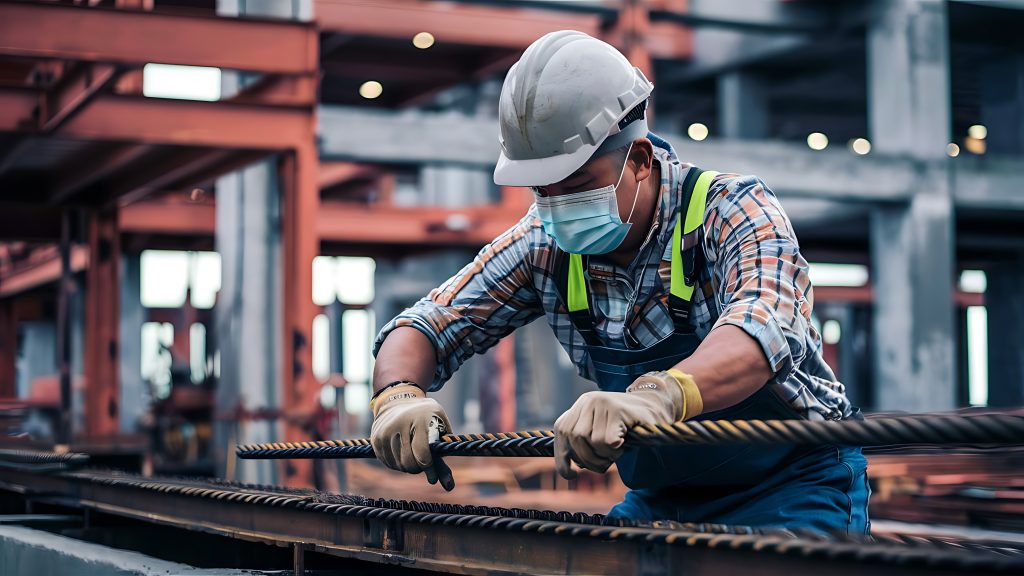
Outsourcing Tekla detailing gives fabricators variable capacity that matches project volume, avoiding the cost of idle detailers during slow periods and the bottleneck of insufficient staff during peak bidding season. Detailing workload rarely moves in a straight line — a shop can be quiet for six weeks and then need three projects modeled simultaneously. An outsourced partner absorbs that volatility; an in-house team just gets stretched thin or sits underutilized.
The Real Cost of an In-House Detailing Team
A single Tekla license, ongoing training, and a detailer’s salary add up fast, and that’s before accounting for ramp-up time on a new hire or turnover risk on a small team. Outsourcing converts that fixed cost into a variable one tied directly to project volume — you pay for detailing when there’s steel to detail, not for downtime between contracts.
Access to Specialized Connection and Modeling Expertise
Not every in-house detailer has deep experience across primary framing, connection design, and secondary steel simultaneously. Outsourcing gives fabricators access to a team that handles these categories daily across multiple clients, which typically means fewer connection errors reaching the shop floor than a generalist in-house detailer working alone.

How an Outsourced Tekla Detailing Workflow Actually Runs
The workflow only stays efficient if handoffs are structured — loose file transfers and unclear scope are what turn outsourcing into a bottleneck instead of a time-saver.
Step One: Structural Drawing and Scope Review
Before modeling starts, we review the structural engineer’s drawings, confirm the governing connection standard (AISC, CISC, or project-specific), and map which portions of the project require structural steel detailing versus miscellaneous or secondary detailing. This step determines the modeling approach before a single component is placed.
Step Two: Coordinated Modeling Across All Steel Categories
Primary framing, connections, and secondary elements are modeled inside one Tekla file rather than as separate drawing packages. That includes miscellaneous steel detailing for stairs, rails, and platforms, along with steel joist and deck detailing for roof and floor bearing conditions — all checked against the same primary steel geometry instead of reconciled manually after the fact.
Revision Cycles Without Redrawing
Because the model is parametric, a connection revision or a beam size change updates every related drawing, bolt list, and material takeoff automatically. This is the step where outsourcing shows its biggest schedule advantage: revisions turn around in a fraction of the time required by hand-redrafted 2D sets.
Step Three: Fabrication-Ready File Delivery
Shop drawings, erection plans, and NC/DSTV files for CNC equipment are all generated directly from the finished model. We’ve documented how Tekla Structures generates these outputs from a single coordinated source, which is what keeps every document in the delivered package internally consistent — no version drift between the shop drawing and the bolt list.
What Streamlined Shop Drawing Workflows Mean for Fabricators
A streamlined workflow shows up as measurable outcomes: shorter revision turnaround, fewer RFIs, and drawing packages that arrive ready for the shop floor instead of needing internal review and correction first.
| Detailing Model | Staffing Overhead | Revision Turnaround | RFI Volume | Scalability |
|---|---|---|---|---|
| Full in-house team | High — fixed salary + software costs | Slower during peak load | Moderate | Limited by headcount |
| Ad hoc freelance detailers | Variable, inconsistent quality | Unpredictable | High | Unreliable |
| Outsourced Tekla detailing partner | Low — pay per project | Fast, model-driven | Low | Scales with project volume |
For shops running lean, this scalability matters as much as accuracy. A fabricator that can flex detailing capacity up or down without hiring cycles wins more bids — because they can commit to schedules that a fixed in-house team simply couldn’t absorb during a busy quarter.
Choosing an Outsourcing Partner That Fits Your Shop’s Workflow
Not every outsourced detailing provider integrates cleanly into an existing shop process. Before starting a partnership, we confirm three things: the fabricator’s preferred file formats and delivery standards, the shop equipment that NC/DSTV files need to be compatible with, and the communication cadence needed during active revision cycles. Getting this alignment wrong is how outsourcing ends up creating more coordination overhead than it saves — getting it right is what makes an outsourced Tekla partner feel like an extension of the shop rather than an outside vendor.
Frequently Asked Questions

Is outsourced Tekla detailing as accurate as an in-house team?
It can be more consistent, provided the outsourcing partner specializes in Tekla-based detailing across primary framing, connections, and secondary steel. Because the entire model is built in one coordinated file, accuracy doesn’t depend on one individual detailer’s daily workload or experience level the way it often does with a small in-house team.
How fast can an outsourced Tekla detailing team turn around a project?
Turnaround depends on tonnage, connection complexity, and revision volume, but Tekla’s model-driven workflow generally shortens cycles compared to in-house 2D drafting, since revisions propagate automatically rather than requiring manual redraws. We provide a project-specific timeline after reviewing structural drawings and scope.
What file formats does outsourced Tekla detailing deliver?
Standard deliverables include PDF shop drawings, DXF/DWG files, and NC/DSTV data formatted for CNC fabrication equipment. Delivery formats are matched to whatever a fabricator’s shop already uses, so outsourcing doesn’t require the shop to change its existing production process.
Conclusion

Outsourcing Tekla steel detailing isn’t just a cost-saving move — it’s a workflow decision that trades fixed in-house overhead for scalable, model-driven accuracy across every category of steel on a project. When primary framing, connections, miscellaneous steel, and secondary elements are all handled inside one coordinated Tekla model by a team that specializes in it, fabricators get shop drawings that arrive fabrication-ready, with fewer RFIs and faster revision cycles than an in-house team can typically sustain on its own.