Skip to content
We have seen countless steel projects where everything seemed on track until connections became the problem. Connection design in steel detailing is the critical process of engineering and documenting how individual steel members—beams, columns, braces, joists, and miscellaneous components—join together to create a stable, load-bearing structure. While it might appear as a small part of the overall detailing scope, errors in this area often prove the most expensive and disruptive to fix.
In this detailed guide, we explore what connection design truly entails, why it demands exceptional precision, and how US fabricators and contractors can avoid the common pitfalls that inflate costs and delay projects. Our goal is to equip you with actionable insights that strengthen your operations and protect your profitability.

Understanding Connection Design in Steel Detailing
Connection design sits at the heart of steel detailing. It translates the structural engineer’s high-level intent into precise, buildable instructions for fabricators and erectors. Connections transfer forces—tension, compression, shear, and moment—between members while maintaining structural integrity, ductility, and serviceability.
We define a well-designed connection as one that is not only structurally sound but also practical to fabricate in the shop and erect in the field. This includes bolted connections, welded connections, or combinations of both, along with gusset plates, stiffeners, end plates, shear tabs, and other hardware.
In the United States, connection design must comply with AISC 360 specifications, AWS D1.1 welding codes, and project-specific requirements. Delegated design is common, meaning the detailer or a specialized connection engineer often assumes responsibility for final connection configurations after the engineer of record provides design forces.
Types of Connections and Their Unique Challenges
- Shear Connections: Simple connections like single-plate shear tabs or double-angle connections primarily resist vertical loads. While seemingly straightforward, they require careful attention to bolt spacing, edge distances, and eccentricity.
- Moment Connections: These resist rotation and bending moments, often involving extended end plates, flange plates, or directly welded configurations. They are more complex and demand precise welding and stiffener detailing.
- Bracing and Truss Connections: Gusset plates are common here, requiring detailed analysis for buckling, block shear, and Whitmore sections.
- Base Plates and Anchor Rods: Critical for column-to-foundation connections, these must accommodate erection tolerances, grout, and anchorage into concrete.
Each type presents unique detailing considerations. We emphasize that the best connections balance engineering requirements with real-world fabrication constraints, such as your shop’s welding capabilities and equipment.
Why Connection Design Errors Are Exceptionally Costly
Errors in connection design frequently rank among the most expensive issues in steel projects for several compelling reasons. Unlike member sizing mistakes that might be caught early, connection problems often surface during fabrication or erection—when changes carry heavy time and material penalties.
Financial Impact of Rework and Delays
A single misdetailed connection can halt shop production for an entire assembly or require field modifications under tight schedules. Industry observations consistently show that connection-related rework can add significant percentages to project costs through extra labor, rushed shipping, overtime, and crane time. We have witnessed projects where a handful of problematic moment connections ballooned budgets by tens of thousands of dollars.
Delays compound the issue. When steel erection stalls, the entire construction schedule suffers—impacting concrete pours, MEP rough-ins, and finishing trades. General contractors may impose liquidated damages, further eroding margins.
Safety and Liability Concerns
Connections are where forces concentrate. Inadequate design can lead to joint failures with serious safety implications. Even if no collapse occurs, code violations discovered during inspections trigger costly remediation and potential legal exposure. We prioritize designs that exceed minimum code requirements where practical, providing an extra margin of safety and peace of mind.
Coordination Challenges
Modern buildings feature complex interfaces. A connection that works in isolation might clash with MEP penetrations, fireproofing, or architectural cladding. Poorly coordinated connection design generates RFIs that slow approval processes and frustrate all stakeholders.

The Connection Design Process: Our Proven Approach
We follow a disciplined, collaborative methodology to minimize errors and maximize value.
Initial Data Review and Load Verification
Every project begins with a thorough review of structural drawings, design criteria, and load tables. We verify governing forces (shear, moment, axial) and note any special conditions such as seismic or fatigue requirements. Early RFIs resolve ambiguities before modeling begins.
3D Modeling and Analysis
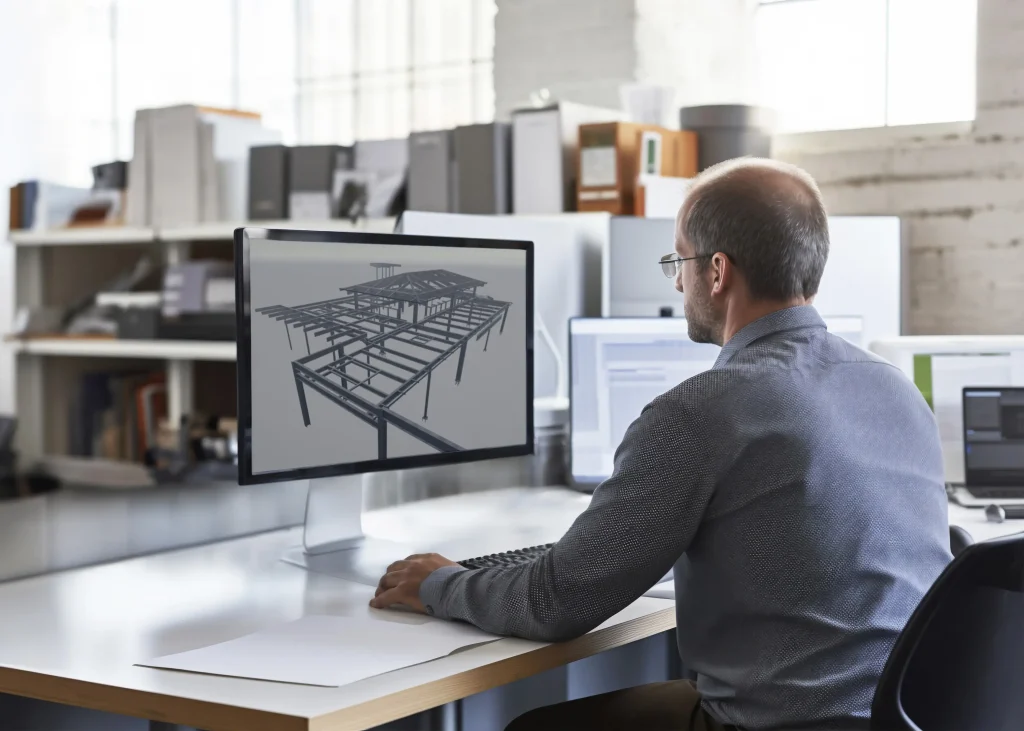
Advanced BIM tools like Tekla Structures allow us to model connections parametrically within the full assembly. We analyze each joint for capacity, considering limit states such as bolt shear, bearing, weld strength, plate yielding, and block shear. Automated checks help ensure compliance with AISC provisions.
Clash detection runs against the entire model identify spatial conflicts early.
Detailing for Fabricability and Erectability
We design with your shop in mind—favoring standard hole patterns, accessible welds, and minimized field welding where possible. Erection clearances, bolt access, and temporary stability during construction receive equal attention. Clear annotations on shop drawings eliminate guesswork for your team.
Quality Control and Peer Review
Multiple layers of review, including independent checks by senior detailers or engineers, catch potential issues. We maintain detailed revision histories and ensure all changes are clearly communicated.

Best Practices to Avoid Costly Connection Mistakes
Excellence in connection design stems from habits and processes refined over many projects.
- Early Collaboration: Engage fabricators, erectors, and the engineer of record from the design development phase.
- Standardization with Flexibility: Use proven standard connections where appropriate while allowing customization for unique conditions.
- Comprehensive Documentation: Provide detailed views, sections, schedules, and notes that leave nothing to interpretation.
- Leverage Technology: Modern software with built-in connection libraries and analysis tools dramatically improves accuracy and speed.
- Continuous Education: Stay current with AISC updates, new research on connection behavior, and evolving seismic provisions.
We also recommend value engineering reviews during detailing. Small optimizations in connection types can yield substantial savings in labor and material without compromising performance.
The Role of Technology and Expertise in Modern Connection Design
Today’s tools transform what was once a manual, error-prone process into a precise, data-driven workflow. Intelligent 3D models automatically update drawings when changes occur, and integrated analysis verifies capacities instantly.
However, technology is only as good as the team behind it. Experienced detailers who understand both theory and practical fabrication bring invaluable judgment that software alone cannot provide. We combine the best of both worlds to deliver reliable, cost-effective connection designs.
Common Connection Design Pitfalls and How to Prevent Them
Frequent issues include insufficient edge distances, undersized welds, ignored eccentricity, poor constructability, and failure to account for tolerances. Prevention starts with robust checklists, thorough coordination, and a culture that encourages questions rather than assumptions.
For delegated design projects, clear scopes of responsibility prevent finger-pointing when issues arise.
Frequently Asked Questions

What is the difference between structural design and connection design in steel detailing? Structural design establishes overall member sizes and load paths, while connection design focuses on the detailed engineering and documentation of how those members join together to transfer forces safely and efficiently.
Why do connection errors cost more to fix than other detailing mistakes? They are often discovered late in fabrication or during erection, requiring disassembly, new material, additional labor, and schedule recovery efforts. Their localized nature affects multiple members and trades.
How can fabricators improve outcomes in connection design? Partner with experienced detailing teams early, provide clear shop preferences upfront, maintain open communication, and invest in quality reviews. Proactive involvement reduces surprises and enhances buildability.
Conclusion

Connection design in steel detailing is where engineering theory meets practical construction reality. When executed with precision, it creates structures that are strong, safe, and economical to build. When overlooked or rushed, it becomes the source of the costliest problems in steel projects.
We are committed to delivering connection designs that protect your schedule, budget, and reputation. Our team brings deep expertise, advanced technology, and a fabricator-focused mindset to every project, ensuring connections that perform flawlessly from shop to site.
If you are preparing for a new steel project or struggling with connection challenges on current work, we encourage you to connect with us. Let our expertise in steel detailing and connection design help you avoid expensive pitfalls and achieve outstanding results. Together, we can build stronger, smarter, and more profitable steel structures that stand the test of time.