Skip to content
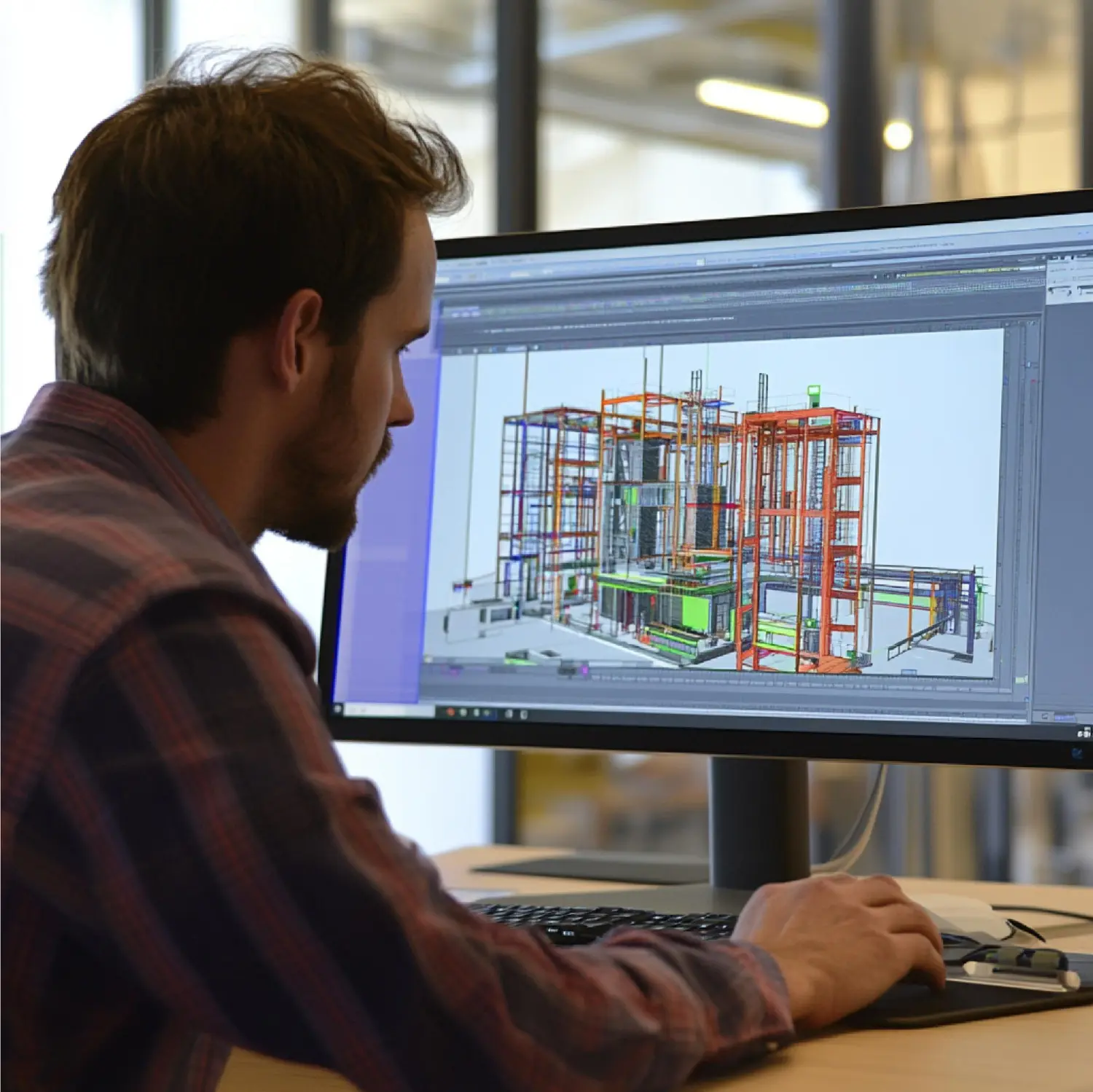
In the fast-moving world of structural steel construction, US fabricators face mounting pressure to deliver precise, code-compliant projects on tighter schedules and thinner margins. As we move through 2026, a clear pattern has emerged: more fabricators are choosing to outsource structural steel detailing rather than keep every drawing and model in-house. This shift is not a temporary cost-cutting tactic. It is a strategic response to labor shortages, rising complexity in building codes, and the competitive need to free internal teams for higher-value work.
We have watched this trend accelerate over the past several years. Fabricators who once viewed detailing as a core internal function now treat it as a specialized service that can be delivered faster, more accurately, and often at lower total cost by external partners. The result is better project flow, reduced rework, and stronger bottom-line performance. In this article we examine the forces driving the change, the practical benefits fabricators are realizing, and how to approach outsourcing in a way that protects quality and schedule.

The Persistent Shortage of Skilled Detailing Talent
One of the strongest reasons US fabricators are outsourcing structural steel detailing in 2026 is the ongoing scarcity of experienced detailers. Training a competent structural steel detailer takes years. Candidates must master 3D modeling software, understand connection design principles, interpret complex architectural and engineering drawings, and stay current with AISC, AWS, and local building code requirements. The pool of professionals who can do this work at a high level remains limited.
Many fabricators report that recruiting and retaining senior detailers has become consistently difficult. When an experienced detailer leaves, the knowledge gap is immediate and costly. Projects slow down, connection details get deferred, and shop floor productivity suffers. By partnering with specialized detailing firms, fabricators gain access to teams that already possess deep expertise and can scale capacity up or down according to project load. This flexibility is especially valuable when multiple large jobs arrive at once or when a key internal detailer is unavailable.
We also see a generational factor at play. A significant portion of highly experienced detailers is approaching retirement, while fewer young professionals are entering the trade at the same pace. Outsourcing helps bridge that gap without forcing fabricators into prolonged and expensive hiring cycles.

Rising Project Complexity and Code Requirements
Structural steel projects in 2026 are rarely simple. Mixed-use towers, large industrial facilities, data centers, and renovations of existing structures all demand highly detailed connection design, precise clash detection, and thorough documentation. BIM coordination with other trades has become standard rather than optional. Detailing must now account for constructability, erection sequencing, and fabrication efficiency from the earliest stages.
Keeping pace with these demands requires continuous investment in software, training, and quality systems. Many mid-sized fabricators find it more practical to outsource the bulk of detailing work to firms whose sole focus is producing accurate, shop-ready drawings and models. These specialized teams typically work with the latest versions of Tekla, SDS/2, or Advance Steel and maintain rigorous internal checking processes. The result for the fabricator is cleaner drawings, fewer RFIs, and smoother fabrication.
Outsourcing also helps fabricators meet increasingly stringent quality and traceability expectations from owners, general contractors, and inspection agencies. External detailing partners who specialize in structural steel often maintain documented quality management systems that align with ISO or similar standards. This adds an extra layer of assurance that can be difficult for smaller internal teams to sustain consistently.

Cost Control and Improved Resource Allocation
Direct labor cost is only one part of the equation. When fabricators calculate the fully loaded cost of an internal detailing department—salaries, benefits, software licenses, training, management overhead, and downtime between projects—the numbers frequently favor a well-managed outsourcing arrangement. External providers spread their fixed costs across many clients, which often translates into competitive pricing for high-volume or peak-load work.
More important than pure cost reduction is the ability to reallocate internal talent. When detailing is handled externally, experienced project managers, estimators, and shop supervisors can focus on production planning, client relationships, and continuous improvement on the shop floor. Fabricators tell us that this shift frequently produces measurable gains in on-time delivery and reduced fabrication errors.
We have also observed that outsourcing allows fabricators to take on larger or more complex projects without first expanding their internal drafting capacity. This flexibility supports growth without the long-term commitment of permanent headcount. In an industry where project volume can fluctuate significantly from year to year, that agility is a genuine competitive advantage.

Technology, Speed, and Collaboration in 2026
Advances in cloud-based collaboration platforms and model-sharing standards have removed many of the historical barriers to remote detailing. Secure file transfer, real-time model review, and integrated issue tracking now make it practical for a detailing team located elsewhere to function as an extension of the fabricator’s own staff. Communication is no longer limited by geography.
Many detailing firms have invested heavily in automation and parametric modeling tools that accelerate repetitive tasks while still allowing skilled engineers to handle complex connections. The combination of technology and specialized expertise frequently produces faster turnaround times than an overloaded internal team can achieve. Faster detailing cycles mean earlier material ordering, better shop scheduling, and improved overall project velocity.
Fabricators who treat their detailing partners as true collaborators—sharing design intent early, providing timely feedback, and establishing clear standards—consistently report the best results. The most successful relationships function less like traditional vendor arrangements and more like integrated project teams.

Risk Management and Quality Assurance
Some fabricators remain cautious about outsourcing because of concerns over quality control or loss of institutional knowledge. These concerns are valid and must be addressed deliberately. The strongest outsourcing programs begin with clear standards, sample deliverables, and defined checking protocols. Many fabricators require that external detailers follow the same modeling conventions, layer standards, and annotation practices used in-house. Regular audit reviews and milestone checkpoints help maintain consistency.
Insurance, liability, and intellectual property issues are routinely managed through well-drafted contracts that allocate responsibility appropriately. Experienced detailing firms carry professional liability coverage and understand the importance of protecting proprietary fabrication methods. When these elements are handled properly, outsourcing actually reduces certain risks by introducing an independent set of eyes on the work.
We also note that many fabricators keep a small internal detailing capability for high-priority or highly specialized work while outsourcing the majority of production detailing. This hybrid model preserves critical knowledge while still capturing the capacity and cost benefits of external support.
How Fabricators Are Structuring Successful Partnerships
The fabricators seeing the greatest benefit from outsourcing tend to approach it strategically rather than transactionally. They select partners based on demonstrated structural steel experience, software proficiency, communication practices, and cultural fit rather than lowest price alone. They invest time up front to align on standards, preferred connection details, and preferred communication channels. They treat the detailing firm as an extension of their team and share project context that helps the detailers make better decisions.
Clear scopes of work, realistic schedules, and prompt feedback loops are essential. When fabricators provide complete and accurate background information early—including design drawings, connection design criteria, and any special requirements—the quality and speed of the detailing output improve dramatically. Regular coordination meetings, even if brief, keep both sides aligned and prevent small issues from becoming larger problems.

Looking Ahead: The Continuing Role of Outsourcing
As we progress through 2026 and beyond, the pressures that currently favor outsourcing are unlikely to diminish. Labor markets for skilled detailers will remain tight. Project complexity will continue to increase. Owners and general contractors will keep pushing for faster delivery and higher documentation quality. Fabricators who build reliable detailing partnerships will be better positioned to respond to these demands.
Outsourcing structural steel detailing is no longer viewed as a sign of weakness or a purely defensive move. It has become a standard operating practice for many competitive fabricators who want to protect margins, improve delivery performance, and focus their internal resources where they create the most value. The firms that approach it with clear standards, strong communication, and a partnership mindset are the ones realizing the greatest returns.
Frequently Asked Questions

Is outsourcing structural steel detailing only suitable for large fabricators? No. Mid-sized and even smaller fabricators frequently benefit from outsourcing, particularly when they face peak workloads or lack specialized expertise for certain project types. Many detailing firms offer flexible engagement models that scale to the size of the client and the volume of work.
How do fabricators maintain control over quality when detailing is performed externally? Successful fabricators establish clear modeling standards, require sample deliverables early in the relationship, and implement regular review milestones. Many also maintain an internal checker or project manager who reviews key packages before they are released to the shop. Technology platforms that support model review and mark-up make this process efficient.
Does outsourcing detailing create communication or schedule risks? When managed poorly, yes. When managed deliberately, the risks are often lower than those associated with an understaffed internal team. Clear scopes, defined response times, shared collaboration platforms, and regular coordination calls reduce the likelihood of misunderstandings. Many fabricators report that specialized detailing partners actually improve schedule reliability because they can dedicate focused capacity to the work.
Conclusion

US fabricators are outsourcing structural steel detailing in 2026 because the combination of talent scarcity, project complexity, cost pressures, and technological enablement makes it a practical and often superior alternative to relying solely on internal resources. The most successful fabricators treat detailing partners as strategic collaborators rather than commodity vendors.