Skip to content

We have watched the steel fabrication industry evolve rapidly over the past few years, and 2026 marks a clear turning point. More and more US fabricators are consciously moving away from offshore steel detailing and bringing this critical work closer to home. What once seemed like an easy way to cut costs is now revealing its hidden risks and limitations in today’s demanding construction environment.
In this detailed guide, we explore the real reasons behind this shift, the problems fabricators commonly face with offshore detailing, and the tangible benefits of partnering with experienced domestic steel detailing providers. If your shop is still relying on overseas resources for detailing, we believe this article will give you the clarity and confidence to make a smarter, more strategic decision for your business.
The Growing Trend: US Fabricators Choosing Domestic Detailing Partners
Across the United States, from Chicago and the Midwest to Texas, California, and the Northeast, fabricators are reevaluating their detailing strategies. Many shops that previously sent the majority of their steel detailing work offshore are now actively transitioning back to local or domestic partners.
This shift is not driven by patriotism alone but by hard business realities. In 2026, project schedules are tighter, tolerances more demanding, liability concerns higher, and general contractors expect faster responses and greater accountability. Offshore steel detailing, while sometimes cheaper on paper, often fails to deliver the speed, accuracy, and collaboration that modern US fabrication demands.
We are seeing this change most clearly among mid-sized and larger fabricators who handle complex commercial, industrial, and infrastructure projects. These companies have learned through experience that the true cost of detailing extends far beyond the hourly rate charged by offshore firms.
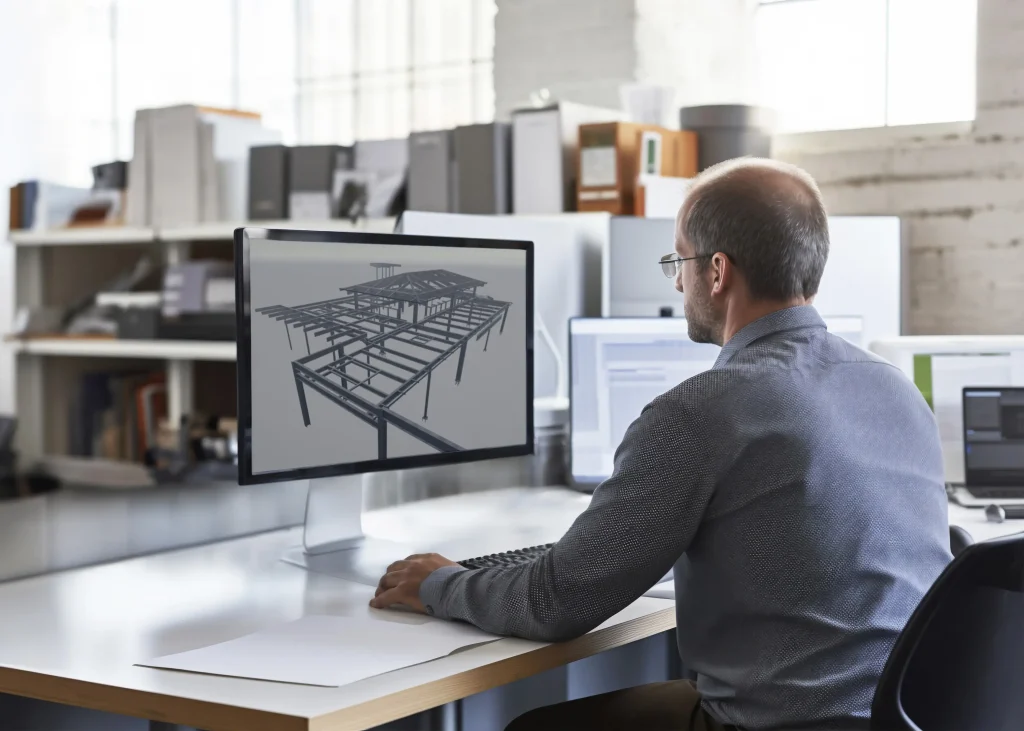
Major Challenges with Offshore Steel Detailing in Today’s Market
We have identified several persistent issues that are pushing fabricators to move away from offshore steel detailing.
Communication Barriers and Time Zone Differences When your detailing team operates 10 to 12 hours ahead or behind, real-time collaboration becomes nearly impossible. Simple questions that could be resolved in minutes with a domestic partner often take days with offshore teams. This lag creates bottlenecks, especially during critical approval phases or when design changes occur.
Quality and Accuracy Issues Offshore detailing frequently suffers from inconsistent quality. Many overseas teams lack deep familiarity with current AISC standards, seismic provisions, or the practical realities of US fabrication and erection practices. This leads to higher error rates, excessive RFIs, and costly rework once steel reaches the shop or job site.
Lack of Constructability Knowledge Domestic detailers understand how steel is actually fabricated and erected in the United States. They know your shop’s equipment capabilities, preferred connection types, erection sequencing challenges, and field tolerances. Offshore teams often produce theoretically correct but practically problematic details that create headaches during production and installation.
Data Security and Intellectual Property Concerns In an era of increasing cybersecurity threats, sharing sensitive project models and proprietary fabrication processes with distant providers carries growing risk. Many US fabricators now prefer to keep critical BIM models and connection designs within trusted domestic networks.
Limited Accountability and Responsiveness When problems arise, offshore providers can be difficult to reach or slow to correct issues. Domestic partners offer direct accountability, faster turnaround on revisions, and a genuine stake in your project’s success.
These challenges have become more pronounced as projects grow in complexity and owners demand higher levels of BIM coordination and faster delivery.

The Clear Advantages of Domestic Steel Detailing for US Fabricators
We strongly believe that partnering with experienced US-based detailing teams delivers significant strategic benefits that far outweigh modest cost savings from offshore options.
Faster Project Delivery and Reduced Lead Times Domestic detailers can respond to RFIs quickly, participate in real-time coordination meetings, and adjust models rapidly when design changes occur. This speed helps fabricators compress overall project schedules and improve cash flow.
Superior Accuracy and Fewer Costly Errors Local teams possess intimate knowledge of AISC 360, the Code of Standard Practice, and regional building codes. They produce cleaner models with better clash detection, more accurate connection designs, and drawings that align with your actual fabrication capabilities. The result is less scrap, fewer field modifications, and smoother erection.
Better Collaboration and Team Integration A domestic partner functions as a true extension of your own team. They can visit your shop, understand your equipment, review samples on the floor, and coordinate directly with your project managers and erectors. This level of integration leads to smarter detailing decisions and fewer surprises.
Stronger Risk Management and Compliance US-based detailers carry professional liability insurance tailored to the American market and maintain full familiarity with current standards and legal requirements. This reduces your exposure and provides greater peace of mind during audits or dispute situations.
Support for Advanced Technology and BIM Workflows Leading domestic detailing firms invest heavily in the latest versions of Tekla Structures, SDS/2, and full BIM integration. They deliver intelligent models that support direct CNC output, 4D scheduling, and seamless coordination with other trades — capabilities that many offshore providers still struggle to match consistently.
Long-Term Cost Savings While offshore rates may appear lower, the true cost of delays, rework, excessive RFIs, and missed deadlines often makes domestic detailing more economical in the long run. Fabricators who make the switch frequently report improved margins and stronger client relationships.
What Smart Fabricators Look for in a Domestic Detailing Partner in 2026
We advise fabricators to evaluate potential partners based on several key criteria.
Look for teams with proven experience across a wide range of project types and a strong track record of on-time delivery. The best partners combine technical expertise with practical shop and field knowledge.
Prioritize firms that use advanced 3D modeling software and can demonstrate seamless integration with CNC machines. Modern detailing is about intelligent models, not just drawings.
Evaluate their quality control processes. Multiple layers of checking, independent reviews, and clear revision tracking are essential for consistent results.
Consider cultural fit and communication style. The right partner should feel like part of your team — responsive, collaborative, and invested in your success.
Finally, choose a detailing provider that understands current market conditions, material availability, and the specific challenges facing US fabricators in 2026.
How to Make a Smooth Transition Away from Offshore Detailing
Moving away from offshore steel detailing requires planning, but the process is manageable. We recommend starting with a pilot project. Select a mid-sized job and compare results between your current offshore provider and a domestic team working in parallel.
Document key metrics such as RFI volume, error rates, revision turnaround time, and overall schedule impact. Most fabricators see clear improvements within the first few projects.
Develop a clear onboarding process so the new detailing partner quickly learns your standards, preferred connections, and shop capabilities. Strong communication during the transition period ensures better long-term results.
Many shops choose a hybrid approach initially — keeping simpler work offshore while moving complex or time-sensitive projects to domestic partners. Over time, the majority shift fully as the benefits become obvious.
Frequently Asked Questions

Why are US fabricators moving away from offshore steel detailing in 2026? Fabricators are shifting due to persistent issues with communication delays, quality inconsistencies, lack of local code knowledge, and the high hidden costs of rework and schedule delays. Domestic detailing offers better speed, accuracy, and collaboration in today’s fast-paced market.
Is domestic steel detailing more expensive than offshore? While hourly rates may be higher, domestic detailing typically delivers lower total project costs through faster turnaround, fewer errors, reduced RFIs, and smoother fabrication and erection. Many fabricators find the overall value significantly better.
How long does it take to transition from offshore to domestic steel detailing? Most shops see positive results within one to three projects. A well-planned transition, including a pilot phase and clear onboarding, usually allows fabricators to fully shift within six to twelve months while maintaining production schedules.
Conclusion

We believe 2026 represents a defining year for the US steel fabrication industry. As project complexity increases and the true costs of offshore steel detailing become harder to ignore, more fabricators are wisely choosing to partner with experienced domestic detailing teams.
By moving away from offshore detailing, you gain faster responses, higher accuracy, better risk management, stronger collaboration, and ultimately healthier profit margins. A reliable US-based partner does not just produce drawings — they become a strategic extension of your shop, helping you compete more effectively and deliver exceptional results consistently.
If your company is ready to reduce risk, improve quality, and regain control over your detailing process, we are here to help. Our team offers professional, responsive, and highly accurate steel detailing services designed specifically for the needs of American fabricators.
Contact us today to discuss how we can support your transition and help your shop achieve greater efficiency, reliability, and success in 2026 and beyond. The future of competitive steel fabrication belongs to those who choose smart, local partnerships — and we are ready to be part of yours.