Skip to content

We understand the pressures you face as a steel fabricator in the United States. Tight deadlines, rising material costs, stringent building codes, and the constant demand for zero-defect delivery can make every project feel like a high-stakes balancing act. That is exactly where structural steel detailing becomes not just helpful, but essential. At its core, structural steel detailing is the critical process of transforming conceptual structural engineering drawings into precise, fabrication-ready instructions and models that ensure every beam, column, connection, and brace fits perfectly on site.
We believe that when fabricators embrace professional detailing from the start, they gain a powerful competitive edge. Accurate detailing minimizes errors, reduces costly rework, speeds up production, and helps deliver projects on time and within budget. In this comprehensive guide, we will walk you through everything you need to know about structural steel detailing—why it matters more than ever for US fabricators, how the process works, the tools involved, its key benefits, potential challenges, and how to implement it effectively in your operations.
Understanding Structural Steel Detailing: The Foundation of Successful Fabrication
Structural steel detailing serves as the vital bridge between the structural engineer’s design intent and the actual fabrication and erection of steel components. We see it as the meticulous translation of high-level plans into shop drawings and erection drawings that fabricators and field teams rely on daily.
Shop drawings provide fabricators with exact specifications for manufacturing each individual steel member. These include precise dimensions, material grades, hole locations, weld details, bolt patterns, and assembly instructions. Erection drawings, on the other hand, guide the ironworkers on site, showing where and how each piece fits into the overall structure, complete with sequencing and alignment references.
Without clear, accurate detailing, even the best-engineered project can encounter misfits, delays, and expensive field corrections. We have seen projects where poor detailing led to beams that would not align, connections that required on-site modifications, or material waste that could have been avoided. Professional detailing eliminates these risks by ensuring every detail—from the smallest bolt to the largest girder—is accounted for upfront.
In the US construction landscape, where projects range from high-rise commercial buildings and industrial facilities to bridges and infrastructure upgrades, structural steel detailing must comply with standards such as those from the American Institute of Steel Construction (AISC), the International Building Code (IBC), and state-specific regulations. We prioritize compliance because it protects fabricators from liability while ensuring the safety and longevity of the finished structure.

The Detailed Process: How We Turn Designs into Fabrication Reality
We approach structural steel detailing as a structured, collaborative workflow that begins the moment we receive architectural and engineering drawings. First, our team thoroughly reviews the design documents to understand load requirements, connection types, member sizes, and overall geometry. This step is crucial for catching ambiguities early and collaborating with engineers to resolve them.
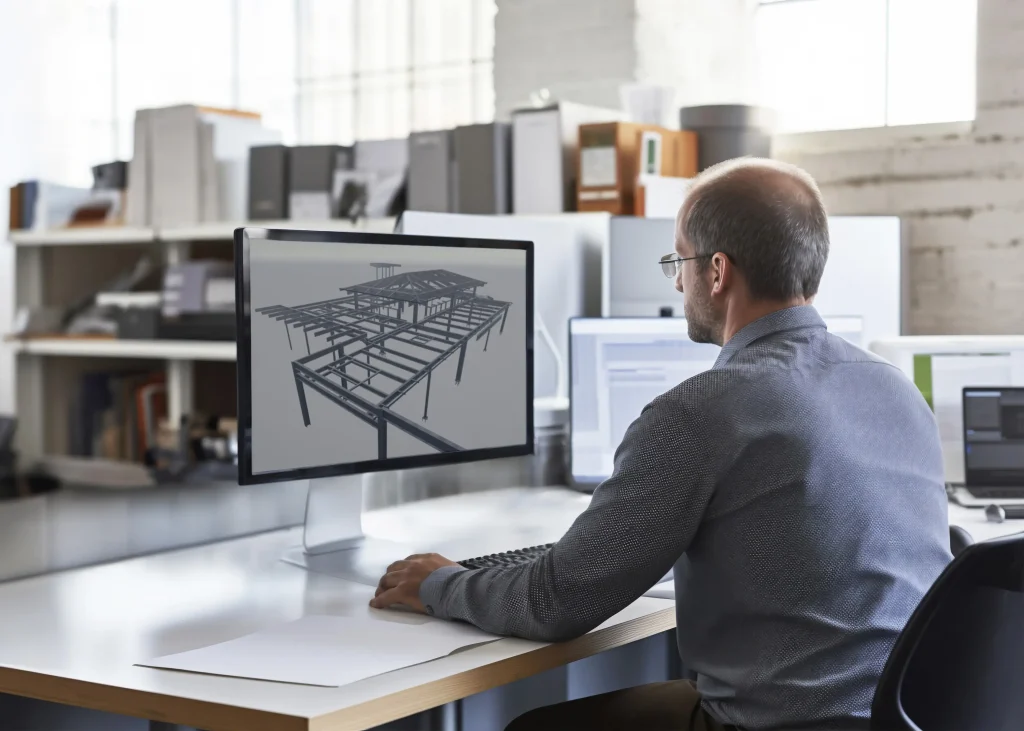
Next comes the creation of a 3D model using advanced software. This digital twin of the structure allows us to visualize every component in context, detect potential clashes with other building systems (such as MEP or architectural elements), and verify fit-up before any steel is cut. Once the model is approved, we generate detailed shop drawings and erection plans.
Key elements we include in every set of drawings are:
- Part drawings for individual members showing cuts, copes, holes, and stiffeners.
- Assembly drawings illustrating how pieces come together.
- Bill of Materials (BOM) with accurate quantities and specifications to optimize purchasing and reduce waste.
- Connection details specifying welds, bolts, plates, and gussets according to AISC standards.
- Erection sequences and marking plans for efficient field assembly.
We emphasize iterative reviews and quality checks throughout the process. Multiple layers of verification—by senior detailers and checkers—help catch issues that automated tools might miss. This human oversight combined with technology is what delivers the reliability US fabricators demand.
The entire process also incorporates value engineering opportunities. We often identify ways to simplify connections or optimize member sizes without compromising structural integrity, which can lead to meaningful cost savings for our fabrication partners.
Why Every US Fabricator Needs Professional Structural Steel Detailing Right Now
In today’s competitive market, fabricators who treat detailing as an afterthought put themselves at a disadvantage. We see several compelling reasons why investing in high-quality structural steel detailing is non-negotiable for success.
First, accuracy drives efficiency. Precise shop drawings mean fabricators can program CNC machines confidently, cut steel correctly the first time, and assemble pieces without guesswork. This reduces shop labor hours and minimizes material scrap—critical when steel prices fluctuate.
Second, time savings compound across the project. When detailing is done right, erection proceeds smoothly on site. Ironworkers spend less time troubleshooting misalignments and more time installing steel productively. Projects stay on schedule, which improves cash flow and strengthens client relationships.
Third, risk reduction protects your bottom line. Errors in detailing can lead to change orders, delays, claims, or even safety incidents. Professional detailing helps fabricators meet AISC certification requirements and demonstrates due diligence, which is increasingly important for bidding on larger or government-funded projects.
Moreover, with growing demand for sustainable construction, accurate detailing supports optimized material use and facilitates the integration of recycled steel or innovative connection systems. Fabricators who leverage detailing effectively can market themselves as precision partners capable of handling complex, fast-track projects that competitors might struggle with.
We have worked with fabricators across the United States who transformed their operations after prioritizing detailing. Shops that once faced frequent RFIs (Requests for Information) and rework now deliver with higher margins and repeat business because their output is consistently reliable.
Modern Tools and Technologies Powering Superior Detailing
The days of purely manual drafting are behind us. Today, we rely on powerful 3D modeling and detailing software that dramatically improves speed, accuracy, and collaboration.
Leading solutions include Tekla Structures, Autodesk Advance Steel, SDS/2, and others tailored for structural steel. These platforms enable parametric modeling, automatic drawing generation, clash detection, and direct integration with CNC fabrication equipment. Some even incorporate AI-assisted features for faster material take-offs and connection design suggestions.
Building Information Modeling (BIM) takes detailing to another level by creating a shared digital environment where architects, engineers, fabricators, and contractors can collaborate in real time. BIM-integrated detailing helps identify conflicts early, supports 4D scheduling (linking the model to timelines), and improves overall project coordination.
We also incorporate cloud-based review tools that allow fabricators and erectors to access drawings and models from anywhere, streamlining approvals and reducing communication lags. For US fabricators dealing with projects spread across multiple states or time zones, these technologies provide a significant advantage.
Staying current with software updates and best practices is part of our commitment. As tools evolve in 2026 and beyond, the fabricators who adopt them gain faster turnaround times and higher-quality outputs without increasing headcount.

Overcoming Common Challenges in Structural Steel Detailing
Even with the best processes, challenges arise. We address them proactively to keep projects moving forward.
One frequent issue is incomplete or ambiguous design information from engineers. We counter this by maintaining open lines of communication and issuing clear RFIs early rather than assuming details. Another challenge involves last-minute design changes. Flexible modeling workflows and version control help us adapt quickly without derailing the entire schedule.
Coordination with other trades can create clashes. Advanced 3D clash detection identifies these conflicts before fabrication begins, saving expensive field modifications. Tight labor markets and skilled detailer shortages are also realities; we mitigate this through efficient software use and, when appropriate, strategic partnerships with experienced detailing teams.
By anticipating these hurdles and building robust quality assurance into every project, we help fabricators avoid the costly pitfalls that plague under-detailed work.

How to Choose the Right Structural Steel Detailing Partner
Not all detailing services deliver the same value. We recommend evaluating partners based on their experience with US codes and fabricator workflows, proficiency with current software, quality control processes, and ability to meet aggressive schedules.
Look for teams that offer clear communication, transparent reporting, and a track record of reducing your shop’s RFIs and rework. The best partners act as extensions of your own team—understanding your equipment capabilities, preferred connection types, and delivery preferences.
Frequently Asked Questions

What exactly is structural steel detailing? Structural steel detailing is the specialized process of creating precise shop and erection drawings that instruct fabricators on how to manufacture steel components and guide erectors on how to assemble them on site. It converts engineering designs into actionable, error-minimizing instructions.
Why is structural steel detailing particularly important for US fabricators? US fabricators operate in a highly regulated environment with strict safety and quality standards. Professional detailing ensures compliance, reduces fabrication and erection errors, controls costs, accelerates project timelines, and helps win more competitive bids by demonstrating reliability and precision.
How long does the structural steel detailing process typically take? The timeline varies based on project size and complexity, but a well-managed process for mid-sized commercial or industrial projects can deliver initial drawings within weeks, with full packages completed in alignment with fabrication schedules. Early engagement with detailers helps compress overall project duration by preventing downstream delays.
Conclusion

We know that in the fast-paced world of US steel fabrication, every advantage counts. Structural steel detailing is far more than technical drawings—it is the strategic foundation that enables accuracy, efficiency, safety, and profitability. By investing in professional detailing today, you position your fabrication business to handle more complex projects, reduce risks, delight clients, and build a stronger reputation in an increasingly demanding market.