Skip to content

As the construction industry hurtles toward a more digital and sustainable era, we at TJ Steel Detailers are excited about the transformative potential of advanced BIM integration in steel detailing. Imagine a world where every steel beam, connection, and frame is not just drawn but virtually simulated, optimized, and seamlessly coordinated before a single piece is fabricated. This isn’t a distant dream—it’s the future unfolding now, driven by technologies that enhance precision, collaboration, and efficiency. With our expertise in Tekla Structures and a commitment to AISC standards, we’ve been at the forefront of integrating Building Information Modeling (BIM) into steel detailing for industrial, commercial, residential, and institutional projects. In this comprehensive article, we’ll explore how BIM integration is reshaping steel detailing, highlight emerging trends for 2025 and beyond, and discuss the enduring benefits and applications of metal structures that thrive under this advanced approach. By optimizing our processes with BIM, we’re helping clients achieve safer, more cost-effective builds that stand the test of time.
The Evolution of Steel Detailing Through BIM Integration
Steel detailing has come a long way from traditional 2D drawings to sophisticated 3D models, and advanced BIM integration is the catalyst accelerating this evolution. At TJ Steel Detailers, we’ve witnessed how BIM transforms static plans into dynamic, data-rich environments that foster better decision-making across the project lifecycle.
What is Advanced BIM Integration?
Advanced BIM integration refers to the seamless incorporation of BIM methodologies into steel detailing workflows, where 3D models become central hubs for information exchange. This goes beyond basic modeling to include real-time data linking, automated clash detection, and interoperability with other disciplines like architecture and MEP (mechanical, electrical, plumbing). In our practice, using Tekla Structures—a BIM-enabled tool—we create detailed models that embed attributes like material properties, fabrication sequences, and erection plans. This integration ensures that steel components are not isolated but part of a holistic building ecosystem, reducing errors and enhancing constructability. For instance, in a commercial project, BIM allows us to simulate how steel frames interact with HVAC systems, preventing on-site conflicts that could delay timelines.
Historical Context and Current Advancements
Historically, steel detailing relied on manual calculations and paper blueprints, prone to human error. Today, with BIM integration, we’re seeing a shift toward automated processes that leverage cloud-based platforms for global collaboration. As we approach 2025, advancements like updated software versions, such as those enhancing collaborative workflows, are making detailing more intuitive and connected. At TJ Steel Detailers, our global reach benefits from this, as teams across continents can access and update models in real-time, ensuring quick RFI responses within 24-48 hours and maintaining project momentum.
Key Components of BIM-Integrated Detailing
Core components include parametric modeling, where changes in one element automatically update related parts, and data-rich attributes that support lifecycle management. Our structural steel detailing services incorporate these, from beams and columns to trusses, ensuring every drawing adheres to AISC standards while optimizing for fabrication efficiency.
Emerging Trends in BIM Integration for Steel Detailing
Looking ahead to 2025, several trends are poised to redefine BIM integration in steel detailing, making processes smarter, faster, and more sustainable. We at TJ Steel Detailers are actively adopting these to stay ahead, ensuring our clients benefit from cutting-edge solutions.
AI-Driven Automation in BIM Workflows
AI is revolutionizing BIM integration by automating repetitive tasks like connection design and material optimization. In steel detailing, AI algorithms can analyze models to suggest efficient layouts, reducing design time by up to 30%. We’re integrating AI tools within Tekla to automate clash resolutions and generate accurate estimations, allowing our skilled Tekla modelers to focus on complex, value-added aspects. This trend not only boosts productivity but also minimizes human error, leading to safer structures.
Digital Twins and Real-Time Data Integration
Digital twins—virtual replicas of physical assets—are a game-changer for BIM integration. By linking real-time sensor data to BIM models, detailers can predict performance and maintenance needs. In institutional projects, for example, this enables proactive adjustments during detailing to enhance resilience. At TJ Steel Detailers, we’re exploring digital twin applications in our rebar and joist detailing services, where simulated scenarios ensure compliance and longevity.
Cloud-Based Collaboration Platforms
Cloud technology is enhancing BIM integration by enabling seamless sharing of models among stakeholders. Platforms that support multi-user access are becoming standard, facilitating global projects without geographical barriers. Our team uses cloud-enabled Tekla to collaborate on miscellaneous steel detailing, from stairs to railings, ensuring all parties—from architects to fabricators—are aligned. This trend is particularly vital for 2025, as remote work continues to dominate.
Sustainability and Green Practices in BIM
Sustainability is woven into future BIM integration, with tools that track carbon footprints and optimize material use. In steel detailing, this means specifying recyclable steels and minimizing waste through precise take-offs. We prioritize green practices in our architectural steel detailing, helping clients achieve certifications like LEED by integrating eco-data into BIM models.
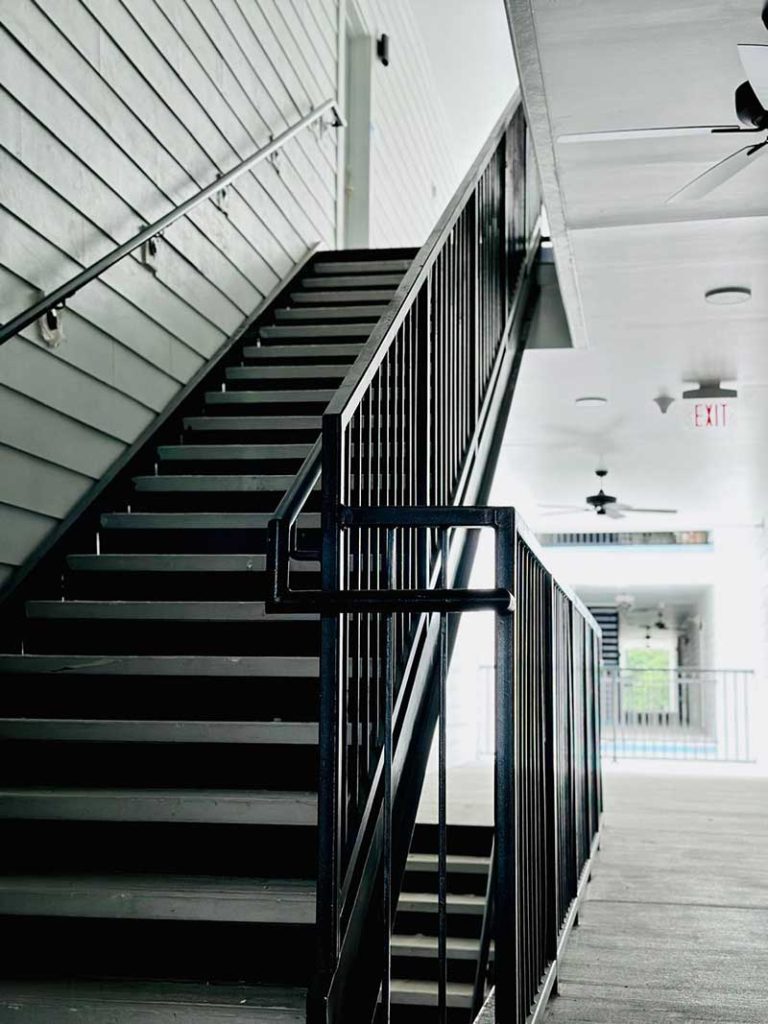
The Benefits and Applications of Metal Structures in BIM-Integrated Projects
Metal structures remain the backbone of modern construction, and with advanced BIM integration, their potential is amplified. At TJ Steel Detailers, we see how BIM enhances the inherent advantages of metal, making it ideal for diverse applications.
Unmatched Benefits for Durability and Efficiency
One of the primary benefits of metal structures is their superior durability, resisting corrosion, fire, and seismic forces when detailed properly. BIM integration elevates this by allowing virtual testing, ensuring optimal performance. For instance, metal’s high strength-to-weight ratio enables lighter designs, reducing foundation loads and costs—savings that can reach 15-20% in large projects. Efficiency is another key benefit; prefabricated metal components, guided by BIM-detailed drawings, accelerate assembly, cutting construction time significantly. We also value metal’s sustainability—fully recyclable and energy-efficient in production—which aligns with green building trends. In our connection design services, BIM helps create joints that enhance safety while minimizing material use, promoting long-term value.
Moreover, metal structures offer flexibility for modifications, a boon in adaptive reuse projects where BIM simulates retrofits without disruption.
Versatile Applications Across Construction Sectors
The applications of metal structures are vast, spanning sectors where BIM integration ensures precision and compliance. In commercial buildings, metal frames support expansive open spaces for offices and retail, with BIM aiding in aesthetic integrations like decorative facades.
Industrial and Commercial Uses
In industrial settings, metal structures form robust frameworks for warehouses and factories, handling heavy loads with ease. BIM integration optimizes these for automation, such as conveyor supports, ensuring seamless operations. Commercially, high-rises benefit from metal’s scalability, where our structural steel detailing creates earthquake-resistant designs via simulated BIM scenarios.
Residential and Institutional Applications
Residentially, metal structures enable modern homes with open layouts and sustainable features, like solar-integrated roofs. In institutional buildings, such as schools and hospitals, metal provides safe, durable environments—BIM-detailed rebar reinforcements in hybrid systems enhance structural integrity for high-occupancy areas. We’ve applied this in projects where metal’s modularity allows for quick expansions, meeting evolving community needs.
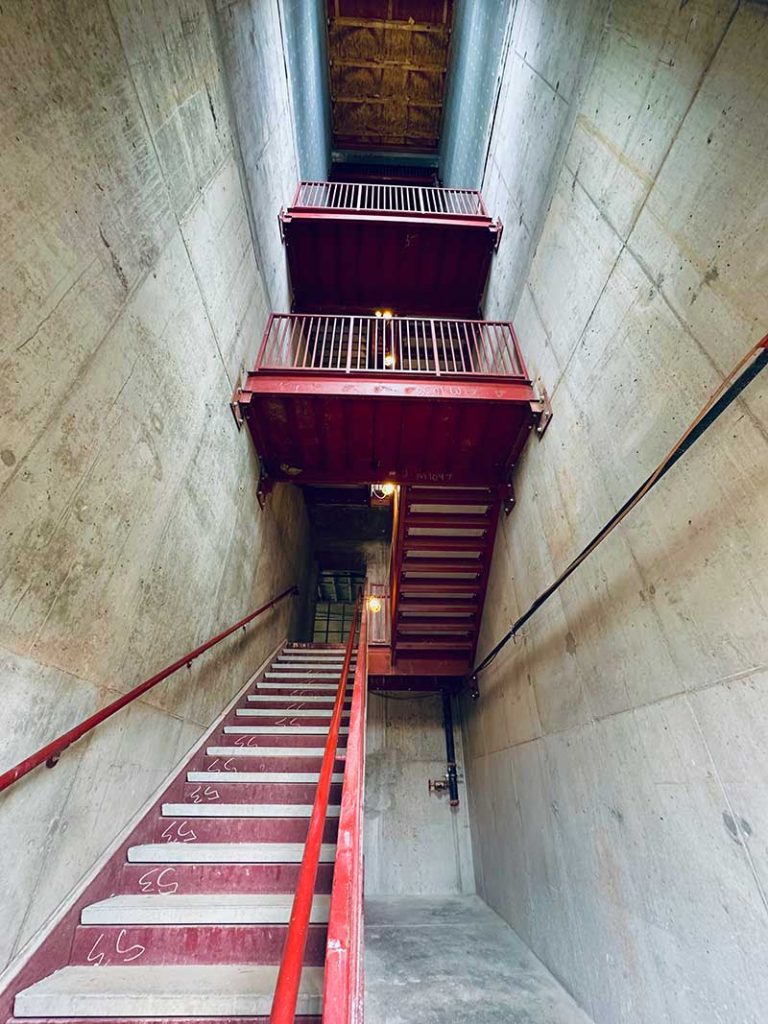
Implementing Advanced BIM Integration: Best Practices from TJ Steel Detailers
To harness the future of steel detailing, we recommend a structured approach. Start with comprehensive training on BIM tools like Tekla, ensuring teams can leverage AI and cloud features. Foster interdisciplinary collaboration early, using BIM for joint reviews. Finally, conduct regular audits against AISC standards to maintain quality.
Our Proven Processes for Success
At TJ Steel Detailers, our project management emphasizes on-time delivery, with every drawing double-checked for accuracy. By integrating BIM, we provide clients with dependable results, from estimation to erection, across global projects.
Frequently Asked Questions

How does advanced BIM integration improve steel detailing accuracy?
Advanced BIM integration enhances accuracy by enabling 3D modeling and clash detection, reducing errors in steel detailing. At TJ Steel Detailers, this means precise drawings that align with AISC standards, minimizing rework and ensuring project efficiency.
What are the sustainability benefits of metal structures in BIM projects?
Metal structures offer recyclability and material efficiency, amplified by BIM integration for waste reduction. Our services optimize these benefits, helping achieve lower carbon footprints in construction while maintaining durability.
Can small projects benefit from BIM-integrated steel detailing?
Yes, even smaller endeavors gain from BIM integration, with tools like Tekla providing scalable solutions. We tailor our detailing services to fit, delivering cost savings and precision regardless of project size.
Conclusion

As we look to the horizon, the future of steel detailing with advanced BIM integration promises a landscape of innovation, where AI, digital twins, cloud collaboration, and sustainability converge to elevate construction standards. By embracing these trends, we at TJ Steel Detailers are committed to delivering precise, efficient solutions that harness the benefits and applications of metal structures—from their durability in industrial giants to versatile uses in residential havens. This integration not only streamlines workflows but also ensures safer, more sustainable builds that benefit clients worldwide. If you’re ready to future-proof your next project with cutting-edge BIM-integrated detailing, we invite you to connect with us—let’s build tomorrow’s structures today.