Skip to content
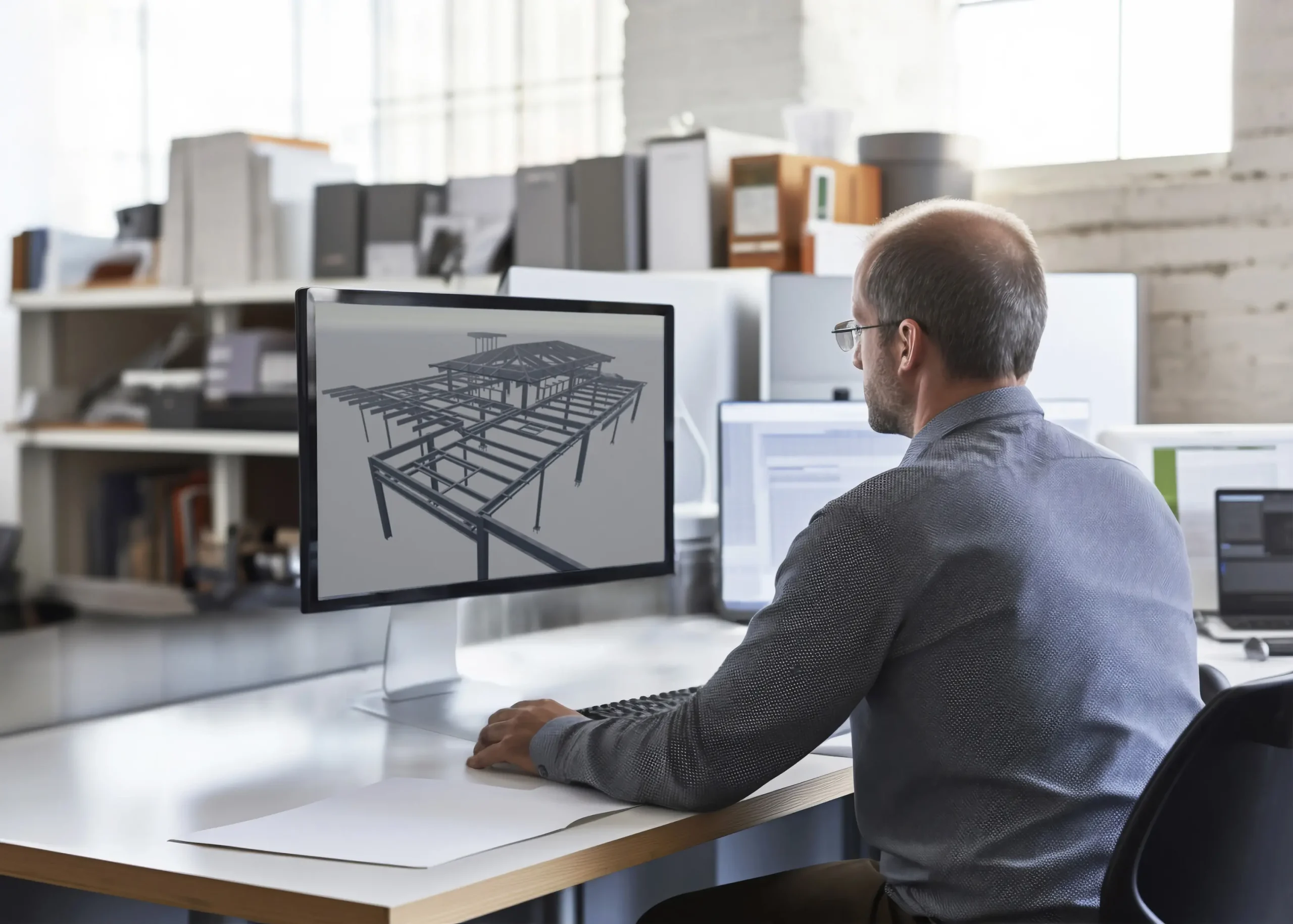
As we navigate through 2026, the steel detailing landscape is undergoing one of its most profound transformations yet. For fabricators and detailers, the days of relying solely on manual drafting and isolated 2D workflows are rapidly fading. Instead, we’re witnessing the widespread convergence of Building Information Modeling (BIM), advanced automation, AI-assisted tools, cloud collaboration, and data-driven processes that are redefining efficiency, accuracy, and project delivery.
We see this shift driven by several converging forces: the explosive growth of data center construction demanding faster turnarounds, persistent labor shortages pushing for productivity gains, and client expectations for clash-free, prefabrication-ready models. In this environment, fabricators who adapt to these technologies gain a decisive edge—winning more bids, reducing rework, and delivering higher-quality steel packages on compressed schedules.
In this comprehensive guide, we’ll examine the key trends shaping steel detailing in 2026, explore how BIM and automation are reshaping workflows, and outline practical preparations fabricators should make now. Our aim is to provide actionable insights so you can position your operation at the forefront of this evolution.
The Current State of Steel Detailing and Emerging Drivers of Change
Steel detailing has long been the critical bridge between engineering design and physical fabrication. Yet traditional methods—manual connection design, sequential approvals, and fragmented file exchanges—create bottlenecks that no longer align with modern project demands.
Major Industry Shifts in 2026
The surge in AI-driven data centers stands out as a primary catalyst. These projects require massive steel volumes—often 15,000 to 25,000 tons per hyperscale facility—while enforcing aggressive timelines to achieve rapid revenue generation from compute capacity. This intensity amplifies the need for streamlined detailing pipelines.
Labor shortages persist across the AEC sector, making automation essential rather than optional. Many fabricators report backlogs in detailing that delay steel release and erection.
Regulatory and sustainability pressures also play a role. Clients increasingly demand accurate material takeoffs, low-waste designs, and lifecycle data, all of which BIM excels at providing.
Why 2026 Marks a Tipping Point
By mid-2026, adoption of advanced tools has accelerated significantly. Industry reports indicate that around 27% of AEC firms actively use AI for automation, with numbers rising as data maturity improves. Software releases like SDS2 2026, Tekla updates, and ALLPLAN enhancements emphasize intelligent workflows, custom connections, and seamless cloud integration.
These advancements turn repetitive tasks into automated processes, freeing detailers for high-value problem-solving while ensuring models are fabrication-ready from the outset.

The Central Role of BIM in Modern Steel Detailing
BIM remains the foundation of contemporary steel detailing, evolving from basic 3D modeling into comprehensive, data-rich environments that support the entire project lifecycle.
Advanced BIM Workflows for Steel Structures
In 2026, BIM for steel has become mandatory on many large-scale projects. Tools like Tekla Structures and SDS2 enable parametric modeling, where changes propagate intelligently across connections, assemblies, and drawings.
Key advantages include:
- Seamless multidisciplinary coordination—steel models integrate with architectural, MEP, and concrete elements for early clash detection.
- Data-rich deliverables—embedded attributes for materials, finishes, and fabrication instructions support automated CNC outputs and ERP integration.
- Lifecycle continuity—models transition into digital twins for operations and maintenance.
We recommend prioritizing open standards like IFC for interoperability, ensuring models remain accessible across platforms.
BIM’s Evolution Toward Higher Dimensions
4D (scheduling), 5D (cost), and even 6D (sustainability) BIM add layers of intelligence. Fabricators use these to simulate erection sequences, optimize phasing, and predict material needs with greater precision.
For data center projects, BIM facilitates prefabrication of modular platforms and supports, reducing on-site work in controlled environments.
Automation and AI: Transforming Repetitive Tasks into Intelligent Processes
Automation has moved beyond basic macros to sophisticated, rule-based systems that handle complex decisions.
Key Automation Features in 2026 Software
Releases such as SDS2 2026 introduce enhanced connection automation, welding improvements, and constructability checks for custom profiles. These tools generate production-ready details faster while ensuring compliance with standards like AISC.
AI-driven features automate clash detection with higher accuracy than rule-based methods, classify elements, and flag constructability risks early. Generative design suggests optimized layouts for strength, weight, and cost.
Benefits for Fabricators
- Reduced manual input—repetitive tasks like bolt placement or bracing patterns become scripted.
- Faster throughput—shop drawings produced in hours rather than days.
- Improved quality—fewer human errors, consistent standards, and better prefabrication confidence.
We advise starting with pilot implementations on standard connections before scaling to complex assemblies.
Preparing for AI Integration
Train teams on AI-assisted tools, focus on data quality (clean models feed better results), and explore platforms with built-in machine learning for predictive analytics.

Cloud Collaboration, Digital Twins, and the Connected Future
Cloud platforms enable real-time, multi-user access, breaking down silos between detailers, engineers, fabricators, and erectors.
Cloud Platforms Driving Efficiency
Trimble Connect, BIMPLUS, and Autodesk Construction Cloud host live models for issue tracking, markups, and approvals. This eliminates version conflicts and accelerates coordination.
For distributed teams—common in global projects—cloud ensures seamless updates regardless of location.
Digital Twins and Lifecycle Management
Digital twins extend BIM into operations, using sensor data for monitoring. In detailing, twins validate as-built conditions against design, supporting retrofits and future expansions.
Sustainability features—carbon tracking, optimized material use—align with growing ESG requirements.
Implementation Roadmap for Fabricators
- Audit current workflows for bottlenecks.
- Select compatible software and cloud platforms.
- Invest in training and pilot projects.
- Standardize libraries for data center or industrial details.
- Monitor ROI through metrics like RFI reduction and delivery speed.
Overcoming Adoption Challenges
Cost, skill gaps, and resistance to change remain barriers. Start small with high-impact features like automated connections. Partner with vendors for training and support. Demonstrate quick wins to build internal buy-in.
Security concerns? Enterprise platforms offer robust encryption and compliance.
FAQs

How will AI change steel detailing roles in 2026? AI automates routine tasks like clash detection, connection generation, and drawing production, allowing detailers to focus on complex problem-solving, custom designs, and quality oversight. Rather than replacing jobs, it augments expertise, increasing productivity and job satisfaction.
Is full BIM adoption mandatory for steel fabricators in 2026? While not universally mandated, BIM has become essential for competitive bidding on large projects, especially data centers and infrastructure. Many clients and general contractors require BIM-compliant deliverables for coordination and prefabrication.
What should small to mid-sized fabricators prioritize to stay competitive? Focus on cloud collaboration for better coordination, adopt automation features in existing software, build reusable detail libraries, and pursue targeted training. Partnering with specialized detailing firms for overflow can bridge capacity gaps without massive upfront investment.
Conclusion
The future of steel detailing in 2026 is intelligent, connected, and highly automated. BIM provides the data foundation, automation handles repetition, AI adds predictive intelligence, and cloud platforms enable seamless collaboration—together creating workflows that deliver faster, more accurate, and cost-effective results.