Skip to content

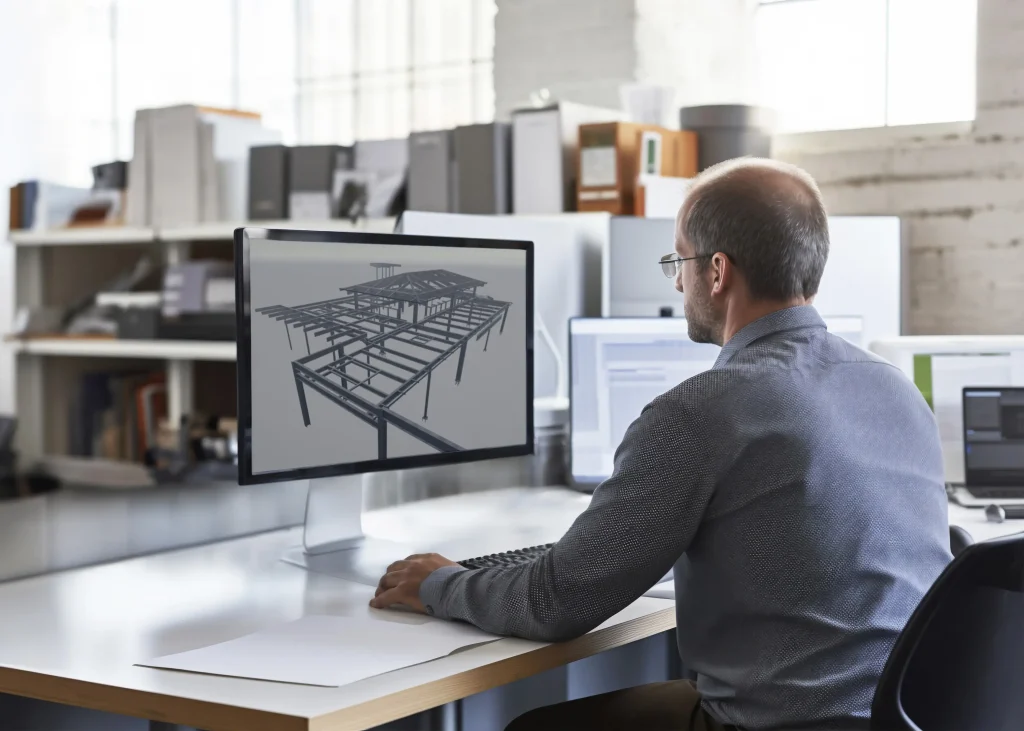
In steel fabrication, the difference between a smooth project and a nightmare often comes down to one thing: whether components fit together as planned on site. Traditional 2D drawings leave room for interpretation, leading to misalignments, forced fits, and costly field modifications. Tekla modeling changes that equation entirely. By building a comprehensive, intelligent 3D model, detailers create a virtual twin of the structure where every clash, tolerance issue, and sequencing problem gets resolved before steel hits the truck.
At T&J Steel Detailers, we rely on Tekla Structures as our core platform. With more than sixty dedicated Tekla modelers, we produce clash-free models that generate precise shop drawings, erection plans, and CNC-ready files. This 3D coordination approach consistently delivers 25 percent fewer shop errors and 99 percent on-time delivery, helping fabricators avoid the expensive surprises that derail schedules and budgets.
What Tekla 3D Modeling Brings to Steel Fabrication
Tekla Structures is purpose-built for structural steel. Unlike generic CAD tools, it creates parametric, data-rich models where every beam, column, brace, plate, bolt, and weld carries intelligent information. Changes propagate automatically—update a connection, and related drawings, reports, and CNC data update instantly.
The real power emerges in coordination. The model becomes a single source of truth for design, fabrication, and erection teams. Fabricators see exact fit-ups, erectors visualize sequences, and engineers verify loads—all within one environment.
The Benefits and Applications of Metal Structures
Steel structures continue to dominate construction because they combine performance with practicality in ways few materials can match.
Exceptional Strength-to-Weight Advantages
The high strength-to-weight ratio enables longer clear spans, taller buildings, and lighter foundations. This efficiency reduces concrete volumes, lowers transportation needs, and opens up flexible interior layouts—perfect for warehouses, offices, and industrial plants.
Durability Under Demanding Conditions
Steel withstands heavy loads, vibration, seismic forces, and extreme weather when properly detailed. Its predictable behavior and resistance to warping or settling make it ideal for facilities requiring uninterrupted operation.
Speed Through Prefabrication
Off-site fabrication in controlled shops accelerates timelines dramatically. Components arrive sequenced and ready to assemble, minimizing weather exposure, labor on site, and overall project duration—critical for time-sensitive infrastructure and commercial builds.
Sustainability and Lifecycle Efficiency
Steel is infinitely recyclable with no quality loss, and modern production increasingly uses recycled content. Lightweight designs cut embodied carbon in foundations and transport. Modular steel allows easy retrofits or expansions, extending service life and supporting adaptive reuse.
Diverse Real-World Applications
These strengths appear across sectors. Industrial facilities—warehouses, manufacturing plants, refineries—rely on long-span frames and heavy crane supports. Commercial projects benefit from column-free retail spaces and rapid high-rise construction. Institutional buildings like hospitals and schools use steel for phased additions and resilience. Infrastructure elements—bridges, transit stations, stadiums—depend on steel’s ductility and precision under dynamic loads.
In all these applications, the full value of steel only emerges when fabrication and erection go flawlessly. That’s where Tekla 3D coordination proves transformative.

How 3D Coordination in Tekla Prevents Common Erection Problems
On-site erection issues typically fall into predictable categories: member misfits, bolt-hole misalignments, connection interferences, sequencing conflicts, and clashes with other trades. Tekla modeling addresses each systematically.
Early and Continuous Clash Detection
Tekla’s built-in clash checking scans the model against itself and imported references (architectural, MEP, concrete). Conflicts appear visually and in reports—steel-to-steel clashes, beam penetrations through floors, brace interferences with ducts. Resolving them in the model eliminates the need for torch cuts, field welds, or delays on site.
Precise Fit-Up Verification
The 3D model shows exact geometry at every joint. Detailers verify clearances, cope dimensions, and alignment before issuing drawings. This ensures beams sit flush, end plates match perfectly, and braces connect without forcing.
Intelligent Erection Sequencing
Tekla allows creation of phased views and assembly instructions. Erection drawings include numbered sequences, temporary bracing notes, and lifting points. Crews see the build order in context, reducing unsafe improvisations and speeding crane time.
Tolerance and Camber Management
Models incorporate real-world tolerances and cambers. Fabricators produce members with built-in adjustments, so the structure aligns naturally under load—no shimming or jacking required.
Seamless Integration with Fabrication
CNC files export directly from the model, ensuring cuts, holes, and copes match exactly. This precision carries through to site: parts fit without rework, reducing labor hours and safety risks.
The Real-World Impact on Fabrication and Erection
Fabricators who receive Tekla-modeled packages report smoother shop flow and fewer surprises in the field. Erection crews spend less time troubleshooting and more time advancing the schedule. Projects stay on track, change orders drop, and overall costs decrease because problems get solved digitally rather than with expensive field labor.
Our Tekla-Centric Process at T&J Steel Detailers
We start with thorough review of structural and architectural drawings, then build a comprehensive Tekla model. Continuous clash detection runs throughout. Every drawing receives automated checks, manual reviews, independent second-checks, and senior approval. RFIs get resolved in 24–48 hours to maintain momentum. Outputs include shop drawings, erection plans, material lists, and CNC files tailored to your equipment.
This disciplined workflow supports fabricators across the United States, delivering packages that perform reliably from cut list to final bolt-up.
Frequently Asked Questions

How does Tekla 3D modeling differ from traditional 2D detailing in preventing erection problems? In 2D, issues like clashes or fit-ups often surface only on site. Tekla’s 3D model lets teams visualize and resolve them virtually—clash detection catches interferences early, parametric updates keep everything consistent, and visual sequencing guides safe, efficient assembly.
What types of on-site problems does Tekla coordination most effectively eliminate? Common issues include misaligned connections, incorrect hole placements, brace interferences, sequencing errors, and trade clashes. By identifying and fixing these in the model, Tekla ensures components arrive ready to fit, reducing field rework, delays, and safety hazards.
Can Tekla modeling really speed up erection and lower overall project costs? Yes. Clash-free models and accurate CNC outputs minimize shop errors and field adjustments. Faster, safer erection shortens crane time and labor needs, while fewer change orders and delays protect budgets—often delivering measurable savings compared to projects without advanced 3D coordination.
Conclusion

Steel fabrication succeeds when the transition from shop to site happens seamlessly. Tekla modeling makes that possible by turning complex structures into predictable, buildable assemblies. Through intelligent 3D coordination, clash detection, precise fit verification, and production-ready outputs, detailers eliminate the guesswork that once plagued erection.
At T&J Steel Detailers, we harness Tekla Structures to deliver exactly that level of certainty. Our clash-free models, rigorous quality processes, and rapid responsiveness help fabricators avoid costly surprises, maintain schedules, and maximize steel’s inherent advantages: strength, speed, and reliability.