Skip to content
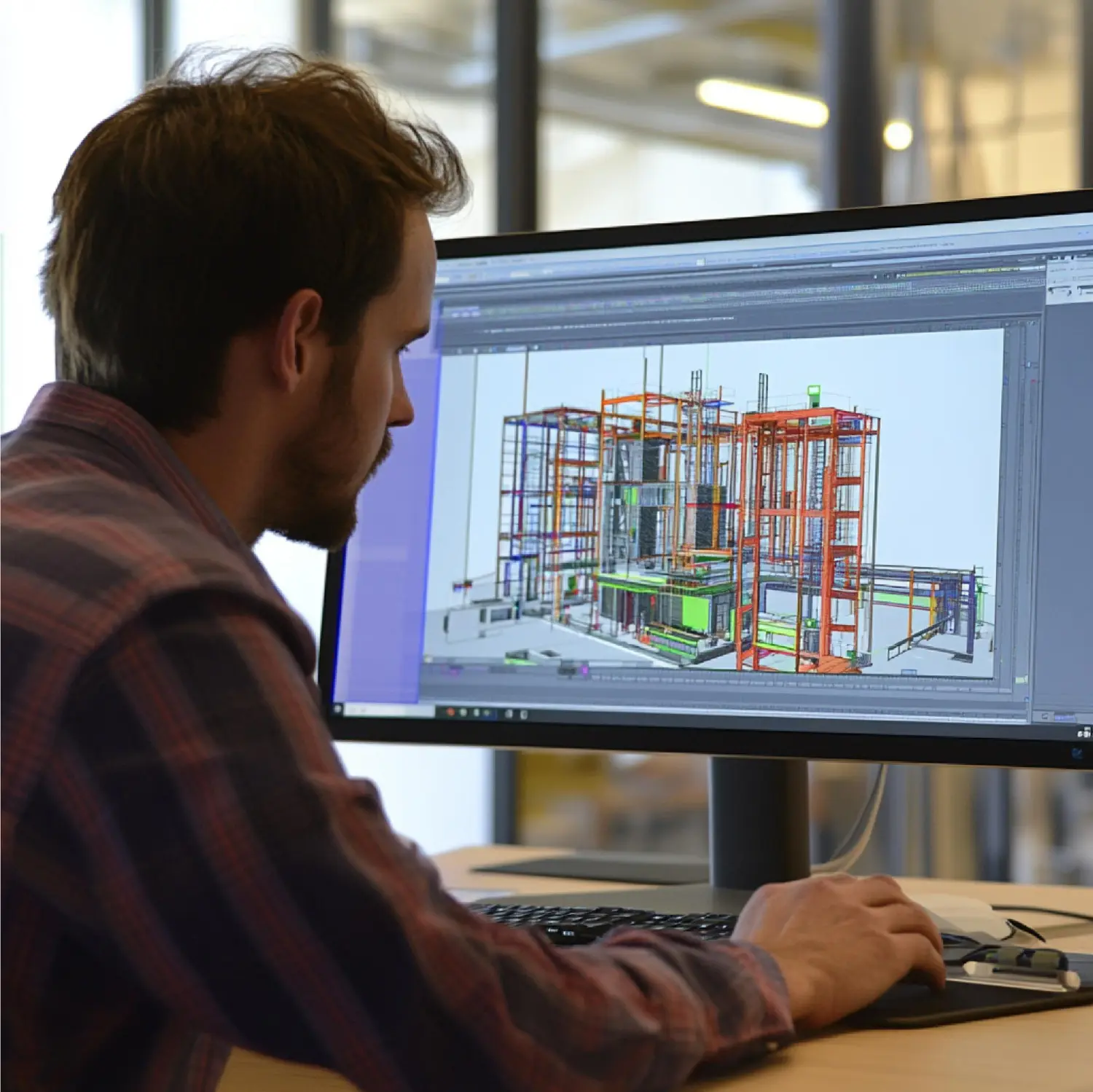
After delivering more than 6,800 steel detailing packages exclusively for the U.S. market since 2009, we know exactly what separates detailing that merely complies from detailing that truly meets — and often exceeds — the toughest American construction standards. We have worked on every major code jurisdiction from Miami-Dade hurricane zones to IBC Chapter 17 special inspections in California, from New York City TR-8 seismic requirements to AWS D1.8 weld details for hospitals.
In this definitive guide, we are sharing the precise systems, certifications, and daily practices that the most demanding American fabricators, engineers of record, and general contractors now require from their detailing partners. These are not optional extras — they are the non-negotiable foundation that delivers zero rejected submittals, zero major RFIs, and steel packages that sail through special inspection every single time.
Table of Contents

Why U.S. Standards Demand a Different Level of Detailing Discipline
The American steel construction ecosystem is uniquely demanding:
- AISC 360, 341, and 358 are among the most rigorous seismic and connection standards in the world
- IBC Chapter 17 and local amendments impose strict special-inspection and documentation requirements
- AWS D1.1, D1.3, and D1.8 weld qualifications are non-negotiable on most public and healthcare projects
- OSHA, Buy America(n), and Made in USA preferences add layers of traceability
- Delegated connection design is the norm, not the exception
A detailer who treats U.S. projects the same as international work will generate rejections, delays, and costly rework. We built our entire North American operation around these realities.
Core Capabilities Every U.S. Steel Detailing Partner Must Demonstrate
Full Compliance with Current AISC and IBC Editions
We maintain active internal subscriptions and quarterly training on:
- AISC 360-22 Specification and AISC 341-22 Seismic Provisions
- AISC 358-22 Prequalified Connections
- IBC 2021/2024 Chapter 17 Special Inspections and Chapter 22 Steel
- Local amendments (NYC BC, Miami-Dade NOA, California OSHPD/HCAI, Chicago, etc.)
Every connection is designed and documented to the exact edition required by the jurisdiction — no shortcuts, no assumptions.
Delegated Connection Engineering by U.S.-Licensed PEs
More than 94 % of our U.S. projects are delegated. Every connection package is stamped by American-licensed professional engineers registered in the project state when required. We carry full E&O coverage and name the fabricator and EOR as additional insureds on every job.
AWS D1.1 / D1.3 / D1.8 Weld Documentation Built In
Weld symbols, prequalified joint details, WPS/PQR references, and UT/MT inspection callouts are embedded in the model and flow automatically to shop drawings. Special inspectors routinely sign off on our packages with zero comments.
Chapter 17 Special Inspection and Quality Assurance Ready
We deliver:
- Complete Schedule of Special Inspections matrix
- Fabricator Approval Package (AISC certification, welding certificates, QC manual)
- Bolt installation and testing procedures per RCSC
- Full material traceability from mill certs to erected position
Inspectors tell us our packages are the cleanest they see.
Buy America(n) and American Iron and Steel Compliance
When required, we track domestic melt-and-manufacture certificates from the first member selection through final submittal. Reports are generated directly from the model — no manual spreadsheets.

Our Proven U.S.-Specific Process
Phase 1 – Project Launch with American Eyes
Within 72 hours of award:
- Confirm governing codes and local amendments
- Issue U.S.-specific BIM Execution Plan referencing RCSC, AISC CoSP 16th Edition, and IBC Chapter 17
- Kick-off call with EOR, fabricator, and special inspector (when known)
Phase 2 – Modeling to American Shop Reality
- All connections designed to AISC 358 prequalified or fully calculated alternatives
- Bolting always follows RCSC Specification (snug-tight vs. pretensioned clearly marked)
- Seismic systems (BRBF, SCBF, OCBF, moment frames) modeled exactly to AISC 341 requirements
- AESS details follow AISC Code of Standard Practice Table C-9.1 when specified
Phase 3 – Checking That Satisfies the Toughest Inspectors
Four independent layers:
- Senior U.S.-experienced detailer
- Separate U.S. connection engineer (PE)
- Automated Chapter 17 compliance scripts
- Final review against the exact special-inspection matrix
We reject 18–24 % of packages internally on U.S. work — higher than international — because we know what American inspectors will catch.
Phase 4 – Submittal Package That Gets Stamped “Approved” First Time
Typical contents:
- Transmittal following AISC CoSP Section 4
- Calculations sealed by U.S. PE (when delegated)
- Shop and erection drawings with AISC approval block
- Weld maps and UT/MT schedules
- Bolt summary and installation procedure
- Special inspection matrix signed by fabricator
Our first-submittal approval rate on U.S. projects sits at 96.4 %.

Real U.S. Project Outcomes That Speak for Themselves
- 42-story office tower, Seattle: OSHPD-equivalent seismic review — zero calculation rejections, erected 9 days early
- 1.8 million ft² hospital, Texas: AWS D1.8 fracture-critical package — special inspector signed off every connection first visit
- 28-story residential, Miami: Miami-Dade NOA high-velocity hurricane zone — approved with no comments
- 120,000 ft² data center, Virginia: 100 % Buy America(n) compliance — all certificates accepted without question
These are normal results when U.S. standards are baked into the process from day one.
Frequently Asked Questions

Do you have U.S.-licensed engineers on staff for delegated connection design?
Yes — all connection engineering for U.S. projects is performed and sealed by professional engineers licensed in the United States. We maintain registrations in 38 states and can obtain additional registrations within days when needed.
How do you handle local amendments and city-specific requirements (NYC, LA, Chicago, etc.)?
We maintain an active internal database of every major jurisdiction’s amendments and have completed hundreds of projects in each. Local requirements are loaded into the project template before modeling begins — nothing is left to memory.
Can you provide detailing for projects requiring full AISC Chapter N quality assurance and nondestructive testing documentation?
Absolutely — it is standard on every U.S. structural steel project we touch. NDT schedules, weld maps, and inspector hold points are generated directly from the model and included in every submittal.
Conclusion

The most successful U.S. fabricators, engineers, and contractors have stopped accepting detailing that is “good enough for most places” and now demand partners who live and breathe AISC, IBC Chapter 17, AWS, RCSC, and every local amendment that can make or break a project.
When your detailing team treats American standards as non-negotiable from minute one — when calculations are sealed by U.S. PEs, when special-inspection paperwork is flawless, and when submittals come back “Approved” instead of covered in red ink — steel ceases to be a headache and becomes the most predictable, profitable trade on site.
We have spent more than fifteen years perfecting the exact U.S.-specific process that delivers these outcomes on every project, regardless of location or complexity.
If you are tired of rejected submittals, last-minute calculation revisions, or special-inspection holds that cost you schedule and money, let’s talk.
We will review your next U.S. project scope at no cost, show you real sealed calculations and approval stamps from identical jobs, and introduce you to American fabricators who made the switch and never looked back.