Skip to content
The structural steel fabrication sector in the United States continues to experience robust growth in 2026, fueled by major infrastructure initiatives, explosive demand for data centers, renewable energy projects, and commercial developments. Yet many American fabricators face the same persistent challenge: limited in-house detailing capacity amid a shortage of skilled professionals. We see this dynamic pushing more shops to explore outsourcing as a strategic solution rather than a temporary measure.
What once began as a simple cost-saving tactic has transformed into a sophisticated, technology-driven partnership model. In 2026, outsourcing structural steel detailing now delivers faster turnaround, higher accuracy, seamless BIM integration, and even sustainability advantages when executed with the right partner. We have guided numerous US companies through this evolution, and we understand that staying competitive requires understanding how the landscape has changed.
This article explores the key ways structural steel detailing outsourcing is advancing for American fabricators. We will examine technological shifts, new collaboration models, compliance considerations, risk management strategies, and practical steps you can take to benefit from these developments. Our goal is to equip you with actionable insights so you can make smarter decisions that enhance efficiency, protect quality, and strengthen your bottom line.
The Driving Forces Behind the Evolution of Detailing Outsourcing
Several interconnected factors are reshaping how US companies approach outsourcing in 2026. Persistent labor shortages in the detailing field remain a primary catalyst. Many experienced detailers have retired, and training programs have struggled to produce enough qualified replacements. This gap forces fabricators to either decline profitable work or risk burnout among remaining staff.
At the same time, project complexity has increased dramatically. Modern steel structures demand precise 3D modeling, clash-free coordination with other trades, and rapid adaptation to design changes. Traditional in-house teams often lack the bandwidth or specialized software expertise to keep pace without delays.
We also observe stronger economic pressures. Material costs fluctuate, project schedules tighten, and general contractors expect fewer RFIs and field issues. Outsourcing has evolved from basic 2D drafting support into a full-service capability that includes intelligent modeling, automated outputs for CNC equipment, and even preliminary optimization suggestions. These advancements allow fabricators to scale capacity flexibly while maintaining control over core fabrication and erection activities.
Technological Advancements Reshaping Outsourced Detailing Workflows
Technology stands at the center of the current evolution. What was once a largely manual process reliant on 2D CAD has become a data-rich, automated ecosystem powered by advanced software and artificial intelligence.
The Mainstream Adoption of AI and Automation in Detailing
Artificial intelligence is no longer experimental—it has become a practical tool that leading outsourcing providers integrate into daily workflows. In 2026, AI assists with automatic connection optimization, clash detection, error prediction, and even generative suggestions for more efficient framing layouts. These capabilities reduce repetitive manual tasks, minimize human error, and accelerate the production of shop drawings and fabrication data.
We recommend evaluating partners who combine AI tools with experienced human oversight. Automation handles routine elements such as bolt placement or basic connection design, while skilled detailers focus on complex nodes, code compliance, and fabricator-specific preferences. This hybrid intelligence approach delivers faster deliverables without compromising the judgment required for high-stakes projects. Fabricators who leverage these AI-enhanced services often report fewer revisions and smoother transitions from detailing to actual shop production.
The Standard Shift to Intelligent 3D BIM Modeling
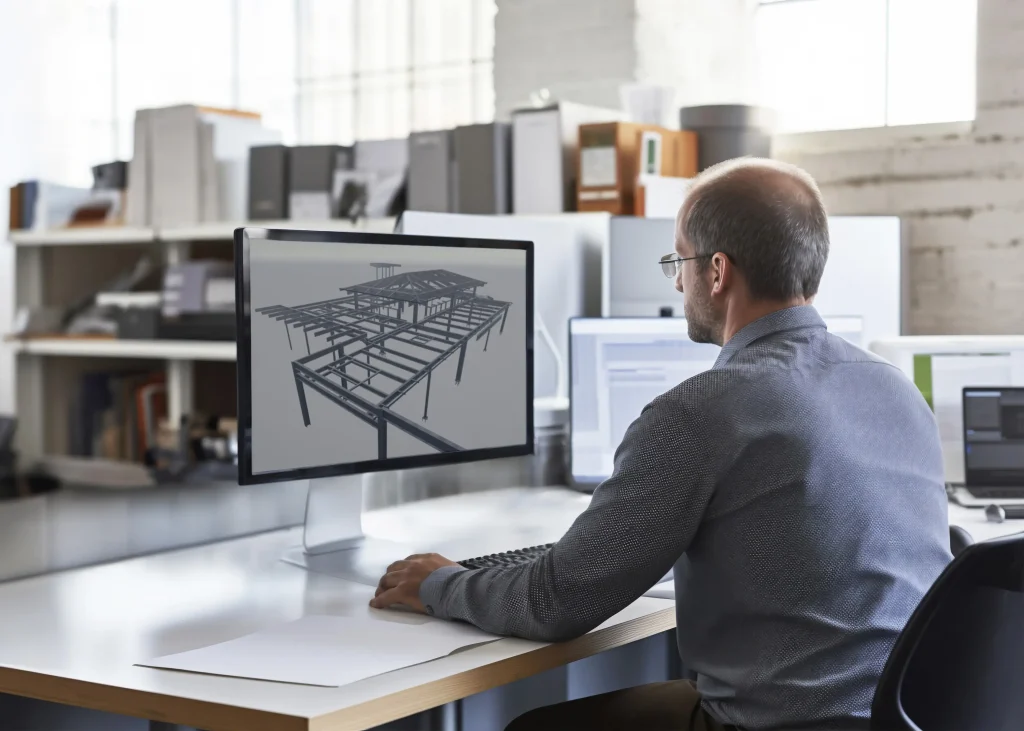
Full 3D modeling and Building Information Modeling (BIM) have become the expected standard rather than a premium add-on. In 2026, successful outsourcing relationships involve the delivery of intelligent, data-rich models that go far beyond static drawings. These models support automated material takeoffs, direct CNC exports, 4D scheduling integration, and real-time coordination with architects, engineers, and erectors.
Platforms like the latest versions of Tekla Structures and SDS/2 now feature enhanced automation, improved drawing editors, better cloud collaboration, and stronger interoperability. Outsourcing partners fluent in these tools can produce fabrication-ready models that align seamlessly with your shop’s equipment and processes. We advise US companies to prioritize providers who demonstrate current certifications and proven experience delivering BIM at appropriate Levels of Development (LOD) for your project types.
Cloud Collaboration and Real-Time Global Workflows
Geographic boundaries matter less than ever thanks to secure cloud platforms that enable real-time model sharing, instant markups, and simultaneous editing. Offshore or nearshore detailing teams can advance work around the clock while your US-based reviewers provide feedback without email delays or version-control issues.
This evolution supports tighter project schedules and better handling of last-minute design changes. In 2026, leading partners offer dedicated project portals with audit trails, automated notifications, and VR/AR visualization options that help stakeholders review complex assemblies virtually before steel is cut. These tools make outsourced teams feel like a true extension of your operation rather than a distant vendor.

Sustainability, Compliance, and Regulatory Considerations in 2026
Sustainability has moved from a secondary concern to a core requirement influencing detailing practices. Clients and specifiers increasingly demand detailed documentation of embodied carbon, recycled content, responsible sourcing, and Environmental Product Declarations (EPDs). Forward-thinking outsourcing providers now incorporate sustainability checkpoints into their modeling processes, optimizing steel usage to reduce waste and supporting your LEED, Buy Clean, or other green building goals.
Compliance with AISC 2026 standards also demands greater attention. Updated requirements around connection design, tolerances, documentation, and model-to-drawing consistency mean that detailing partners must stay current with code changes. We stress the importance of choosing providers who maintain independent quality checking procedures and demonstrate deep familiarity with US-specific regulations, seismic detailing, and OSHA-related erection considerations. As the fabricator of record, you retain liability, so robust compliance from your partner protects your business.
New Partnership Models and Risk Management Strategies
The outsourcing model itself continues to mature. Many US companies now favor hybrid arrangements—outsourcing standard framing and repetitive details while retaining control over complex or proprietary connections and architecturally exposed structural steel (AESS). This balanced approach delivers cost savings and capacity gains without sacrificing oversight where it matters most.
Risk management has also evolved. Modern contracts emphasize clear service level agreements (SLAs) for turnaround times, revision limits, and quality benchmarks. Data security remains paramount, with expectations for SOC 2 compliance, encrypted transfers, strict NDAs, and detailed access logs. We encourage fabricators to conduct thorough due diligence, request references from similar US projects, and begin with a pilot engagement to test real-world performance.
Communication and cultural alignment have improved as well. Leading providers assign dedicated coordinators familiar with American construction rhythms, use clear technical English, and maintain transparent reporting. These elements reduce misunderstandings and build trust over time.
Practical Steps for US Companies to Capitalize on These Evolutions
To benefit from the evolving outsourcing landscape, we suggest a structured approach. First, conduct an honest assessment of your current detailing bottlenecks, including cycle times, error rates, software limitations, and team workload. Document your specific needs regarding project types, software preferences, and desired deliverables.
Next, develop a detailed evaluation scorecard covering technical capabilities, quality processes, compliance expertise, collaboration tools, security measures, and total value rather than hourly rates alone. Request case studies, speak with references, and insist on compatibility testing through a small trial project.
Finally, negotiate contracts that include performance metrics, escalation procedures, and provisions for ongoing improvement. View the relationship as a long-term partnership rather than a one-off transaction. Fabricators who invest time in proper partner selection consistently achieve 40 to 60 percent labor savings on detailing while enjoying faster project starts and fewer field issues.
Frequently Asked Questions
How much can US companies realistically save by outsourcing structural steel detailing in 2026? Savings typically range from 40 to 60 percent on detailing labor costs when factoring in all elements, including review time and quality assurance. Actual results depend on project complexity, volume, and the maturity of the partnership. AI-enhanced processes and efficient workflows often amplify these gains by reducing revisions and accelerating delivery.
Will AI eventually replace human detailers in outsourced structural steel services? AI augments rather than replaces skilled professionals. In 2026, the most effective outsourcing teams combine automation for repetitive tasks with experienced detailers who interpret design intent, resolve complex connections, ensure code compliance, and apply fabricator-specific knowledge. Human oversight remains essential for quality and liability protection.
What should we look for to ensure quality and compliance when outsourcing detailing work? Prioritize partners with independent checking procedures, current AISC familiarity, robust BIM capabilities, and transparent quality reporting. Verify data security certifications, request references from US fabricators with similar work, and implement milestone reviews. A successful pilot project provides the best evidence of real-world performance and compatibility.
Conclusion
Structural steel detailing outsourcing has evolved significantly for US companies in 2026, moving from a basic capacity solution to a strategic advantage powered by AI, advanced BIM, cloud collaboration, and stronger compliance frameworks. We believe fabricators who embrace these changes can overcome labor shortages, control costs, reduce project risks, and deliver higher-quality steel structures with greater predictability.
The key to success lies in selecting partners who combine technological sophistication with practical industry experience, clear communication, and a genuine commitment to your success. By evaluating options carefully, starting with pilot projects, and building transparent relationships, you can transform detailing from a potential bottleneck into a reliable growth enabler.