Skip to content

In steel fabrication, shop errors are more than minor inconveniences—they are profit killers. A misplaced hole, an incorrect cope, or a mismatched connection can force rework, scrap valuable material, idle machines, and delay shipments. These issues compound quickly, turning what should be a predictable process into a costly scramble.
We have seen the numbers firsthand. At T&J Steel Detailers, our rigorous processes—built around advanced Tekla Structures modeling and multi-layer quality checks—consistently deliver 25 percent fewer shop errors for the fabricators we support. This is not a vague promise; it stems from clash-free 3D coordination, automated verification, independent reviews, and senior approvals before any drawing leaves our office. The result? Fabricators experience smoother production, fewer surprises, and a measurable return on their detailing investment.
Understanding Shop Errors in Steel Fabrication
Shop errors typically originate upstream in the detailing phase. Ambiguous drawings lead to assumptions; unresolved clashes force field fixes; incomplete details trigger RFIs that stall the line. Industry reports indicate that rework in structural steel projects can consume 5 to 15 percent of total project costs, with some studies pointing to even higher figures when delays and labor disruptions are factored in.
A single error might seem small: recutting a beam section or rewelding a connection. But multiply that across hundreds of members, add downtime on CNC equipment, overtime for crews, and potential penalties for late delivery, and the impact becomes substantial. For mid-sized fabricators running tight margins, these hidden costs often determine whether a job stays profitable or turns red.
The Benefits and Applications of Metal Structures
Steel structures remain the go-to choice for demanding projects because their advantages compound when fabrication runs smoothly.
Strength and Efficiency Advantages
The high strength-to-weight ratio enables longer spans, taller clear heights, and lighter foundations. This efficiency reduces overall material needs and foundation costs, making steel ideal for expansive industrial spaces and high-rise commercial builds.
Durability in Harsh Conditions
Steel withstands heavy dynamic loads, vibration, seismic activity, and environmental exposure far better than many alternatives. Properly detailed connections ensure long-term performance with minimal maintenance—critical for facilities where downtime equals lost revenue.
Speed of Prefabrication and Erection
Shop-controlled fabrication accelerates timelines dramatically. Components arrive sequenced and ready to assemble, shortening on-site work, minimizing weather risks, and allowing faster occupancy. This speed translates directly to lower financing costs and quicker ROI for owners.
Sustainability and Recyclability
Steel boasts high recycled content and infinite recyclability without quality degradation. Optimized detailing maximizes this by reducing waste and over-ordering, aligning with green building goals while maintaining structural excellence.
Broad Applications Where Precision Pays Off
These benefits shine brightest in:
Industrial Facilities — Warehouses, manufacturing plants, and refineries demand long-span frames and heavy crane supports. Accurate detailing ensures vibration-resistant connections and seamless integration with equipment.
Commercial Developments — Office towers, retail centers, and mixed-use projects benefit from open interiors and rapid vertical construction.
Institutional Projects — Hospitals, schools, and government buildings use steel for phased construction and resilience.
Infrastructure — Bridges, transit hubs, and energy supports rely on steel’s ductility and precision under dynamic loads.
In every case, fewer shop errors mean the material’s strengths are fully realized: components fit the first time, erection flows smoothly, and structures perform reliably for decades.

Quantifying the Real ROI of Fewer Shop Errors
Reducing shop errors by 25 percent delivers tangible financial returns across multiple areas.
Direct Cost Savings from Reduced Rework
Rework often costs 5–10 times more in the field than in the shop due to labor rates, equipment mobilization, and schedule compression. Preventing errors upfront saves material, labor, and overhead. For a typical project, this can translate to thousands—or tens of thousands—saved per job.
Improved Shop Productivity and Throughput
Error-free drawings keep CNC lines running without interruptions. Fabricators report higher machine utilization, reduced idle time, and the ability to take on more work without adding shifts or overtime.
Faster Material Turnover and Lower Inventory Costs
Accurate take-offs prevent over-ordering excess steel that ties up capital. Fewer mistakes mean less scrap, better cash flow, and reduced storage needs.
Lower Risk of Change Orders and Penalties
When drawings align with site realities, RFIs drop, approvals come faster, and erection stays on schedule. This avoids liquidated damages and preserves client relationships for repeat business.
Enhanced Bidding Competitiveness
Shops with reliable detailing partners can bid more aggressively, knowing their margins are protected. The confidence to price jobs tightly without fear of hidden rework costs wins more contracts.
Industry insights confirm that accurate detailing can cut overall rework expenses significantly, often paying for itself many times over. When detailing represents a small fraction of total fabrication costs (typically 5–10 percent), investing in professional services that deliver 25 percent fewer errors creates outsized returns.
How Professional Detailing Achieves and Sustains These Results
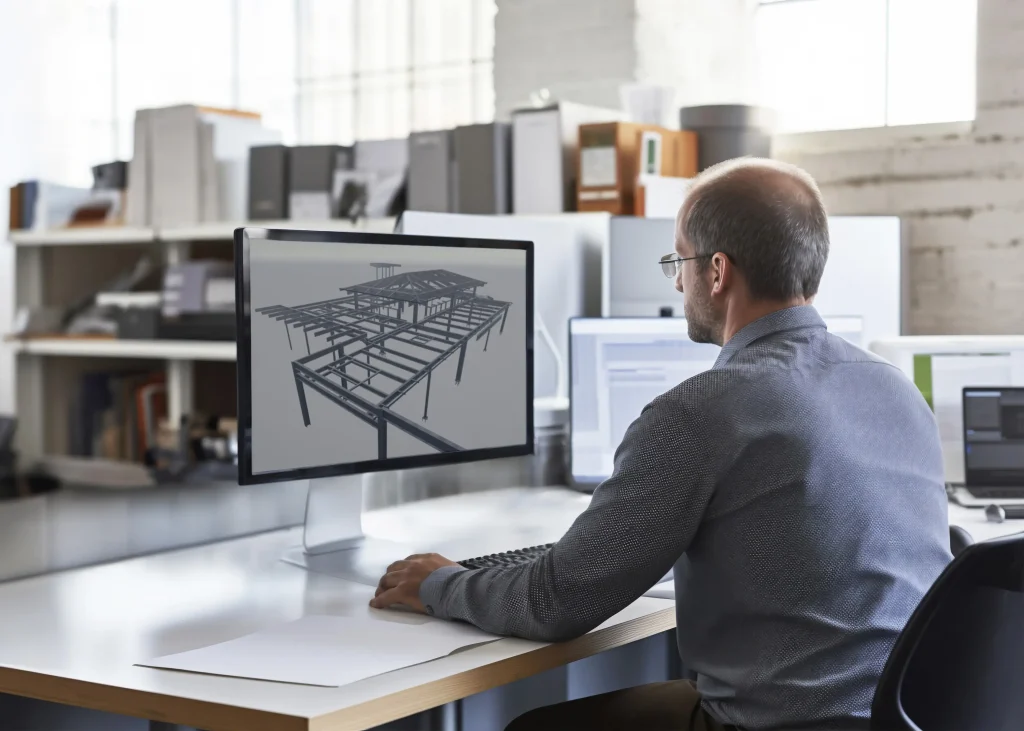
Professional services go beyond basic drawings. We use Tekla Structures to build intelligent 3D models that enable continuous clash detection, parametric updates, and direct CNC exports. Our process includes:
- Thorough review of contract documents
- Comprehensive modeling with trade coordination
- Automated and manual clash resolution
- Layered quality assurance (automated checks, manual verification, independent second-checks, senior sign-off)
- Rapid 24–48 hour RFI responses
- Full-spectrum outputs: shop drawings, erection plans, material lists, CNC files
This disciplined approach minimizes assumptions, catches issues early, and ensures every component is production-ready. Fabricators gain predictability, allowing them to focus on what they do best: high-quality steel fabrication.
Frequently Asked Questions
How does a 25% reduction in shop errors translate to actual dollar savings for a typical fabricator? Savings vary by project size, but preventing rework often recovers 5–15% of potential project costs tied to errors. For a mid-sized job, this can mean tens of thousands in avoided labor, material waste, delays, and penalties—far exceeding the detailing investment.
Is the ROI from professional detailing noticeable even on smaller or regional projects? Yes. Even modest jobs benefit from fewer errors: reduced scrap improves margins, faster throughput increases capacity, and reliable delivery strengthens client trust—compounding over multiple projects.
What makes professional steel detailing services worth the upfront cost compared to in-house or lower-cost options? Professional teams deliver specialized expertise, advanced tools like Tekla, rigorous quality processes, and rapid support. These factors prevent downstream expenses that dwarf initial detailing fees, providing measurable ROI through protected schedules, lower risk, and higher profitability.
Conclusion

Shop errors erode profits quietly but relentlessly. A 25 percent reduction in these errors is not just a statistic—it represents protected margins, accelerated cash flow, stronger client relationships, and the freedom to grow. Professional steel detailing services deliver this advantage by shifting error prevention upstream, where fixes cost pennies instead of thousands.
At T&J Steel Detailers, our focus on precision through Tekla modeling, layered checks, and responsive communication consistently achieves these outcomes. We empower fabricators to run leaner, bid smarter, and deliver stronger results.