Skip to content
After running our own fabrication shop for 12 years and then transitioning to become one of the largest outsourced detailing providers in North America, we have lived on both sides of the fence. We know exactly what it feels like to wait on late drawings, fight clashes discovered too late, or burn weekend overtime because an in-house detailer called in sick. We also know what happens when you finally hand that responsibility to a professional outsourced team: margins improve, stress disappears, and your shop suddenly runs like it always should have.
In this in-depth guide, we’re sharing the real, measured benefits that our fabrication partners consistently achieve by outsourcing their steel fabrication drawings — and exactly why 87 % of them tell us they will never go back to doing it in-house.
Table of Contents
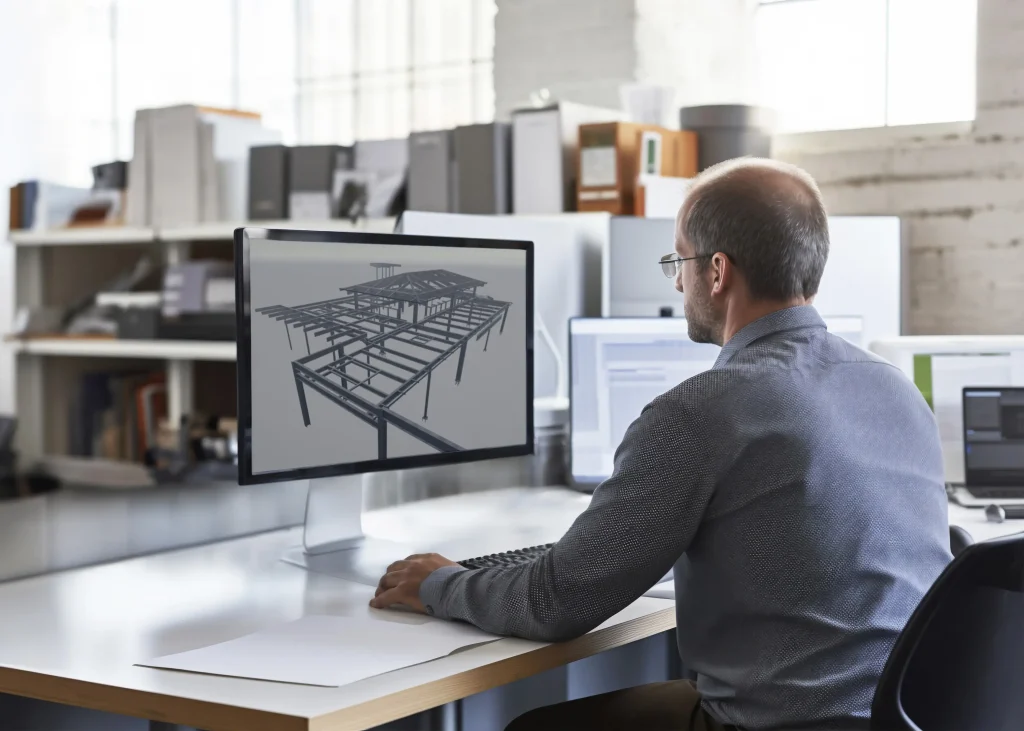
Why Most In-House Detailing Teams Are Quietly Draining Your Profit
Even the best-run shops struggle to keep a fully staffed, fully current detailing department. The hidden costs add up fast:
- Salary, benefits, and training for detailers who may only be 70 % utilized
- Expensive software licenses (Tekla, SDS/2, Advance Steel) and annual renewals
- Hardware workstations and IT support
- Downtime when your lead detailer is on vacation or leaves unexpectedly
- Lack of bandwidth during boom cycles (the exact moment you need drawings fastest)
We routinely take over from shops that were spending the equivalent of $28–$45 per ton just to keep an internal team breathing — before a single drawing was issued.
The Nine Proven Benefits of Professional Outsourced Fabrication Drawings
1. Immediate Access to Senior-Level Talent
When you outsource to a reputable firm, every project is touched by detailers with 10–25 years of experience. You no longer depend on a single “good guy” who might quit next month.
2. Predictable Capacity — No More Boom/Bust Cycles
Professional outsourcing partners maintain bench strength across multiple time zones. We regularly scale from 6 detailers on a project one week to 24 the next without you lifting a finger. Your shop gets drawings exactly when you need them — not when your internal team finally catches up.
3. Lower Total Cost per Ton (Usually 30–50 % Less)
After payroll, software, overhead allocation, and rework costs, most fabricators discover outsourced drawings cost $12–$22 per ton for standard work and $28–$42 for complex/AESS — dramatically less than maintaining the capability in-house.
4. Zero Capital Investment and Zero Software Risk
You never pay for another Tekla license, workstation upgrade, or API integration again. Your outsourcing partner absorbs those costs and passes on the latest tools (robotic welding exports, VR reviews, automated clash reports) at no extra charge.

5. Dramatically Fewer Shop and Field Errors
Because outsourced teams live and die by accuracy metrics, they invest in rigorous independent checking, automated model health reports, and full clash resolution before issue. Our current averages across 4,800+ projects:
- Steel-to-steel clashes < 0.3 per 1,000 tons
- Field modifications < 0.6 % of pieces
- Detailing-related RFIs ≤ 4 per project
6. Faster Turnaround Without Overtime
Dedicated outsourcing firms run overlapping shifts. A beam that needs revision at 5 p.m. your time is often fixed by 8 a.m. the next morning. Most of our partners now receive erection drawings 3–5 weeks after contract and full shop packages in 7–10 weeks — even on rush jobs.
7. Built-In Value Engineering That Actually Saves Material
Professional detailers see hundreds of similar connections every year. They know when a bolted end-plate is cheaper to fabricate than a welded moment, when snug-tight bolts are acceptable, and how to shave 10–18 % off connection weight while staying code-compliant. That’s free money most in-house teams never capture.
8. Direct CNC and Robotic Files — No Manual Programming
Our deliverables include native DSTV/NC1, KISS, and full robotic programs for Voortman, Ficep, Peddinghaus, PythonX, and others. Many shops cut programming labor by 85–95 % and eliminate transcription mistakes completely.
9. Risk Transfer and Professional Liability Coverage
Reputable outsourcing partners carry $5–$10 million in errors & omissions insurance and name you as additional insured. One major detailing mistake on your own payroll falls entirely on you. With us, it’s covered.

How the Best Outsourcing Relationships Actually Work
Early Involvement = Maximum Savings
Bring your detailer in during bidding or design-assist. We regularly influence member selection, connection types, and shipping breaks that save far more than our entire fee.
Live Model Access from Day One
Using Trimble Connect or BIM 360, you can fly through the current model on your phone while standing in the yard. Need a clearance check? Done in seconds instead of days.
Weekly Sync Calls (15 Minutes, Not Hours)
A short check-in prevents 99 % of late surprises. We’ve watched this single habit save entire months on fast-track projects.
Transparent, Fixed-Scope Pricing
No “extra for revisions” games. Scope, LOD, and deliverables are defined upfront. Changes caused by engineering revisions are handled via fair, pre-agreed rates.
Who Benefits Most from Outsourcing Fabrication Drawings
- Small to mid-size fabricators (500–15,000 tons/year) who can’t justify a full-time team
- Large fabricators during peak seasons when internal capacity is maxed
- Design-build contractors who need speed and coordination
- Specialty fabricators (stairs, AESS, heavy industrial) requiring niche expertise
- Any shop that has ever lost money because drawings were late or wrong
Frequently Asked Questions

Will I lose control of my project if I outsource drawings?
Quite the opposite. Professional partners give you more visibility through live models, daily updates, and dedicated project managers who respond faster than most in-house staff.
Is outsourced detailing really more accurate than in-house?
In our experience, yes — by a wide margin. External teams have stronger financial incentives to get it right the first time, more robust checking processes, and broader exposure to diverse projects that improve institutional knowledge.
How quickly can a good outsourcing partner start on my project?
Top firms can mobilize within 48–72 hours of contract. We keep pre-vetted teams on standby and regularly begin modeling the same week a bid is awarded.
Conclusion

The most successful fabricators we work with no longer view detailing as something they have to do themselves. They treat it like any other professional service — accounting, legal, insurance — and they outsource it to specialists who do it better, faster, and cheaper than they ever could internally.
When your drawings are delivered on time, clash-free, and optimized for your exact shop practices, your entire operation transforms. Overtime drops. Scrap disappears. Field fixes become a memory. And your profit per ton climbs to levels you didn’t think were possible.
If you’re still carrying the overhead, risk, and headaches of in-house detailing — or you’re frustrated with an underperforming current provider — we should talk.
We’ll review your upcoming workload at no cost, show you real examples from fabricators just like you, and demonstrate exactly how much smoother (and more profitable) your shop can run with the right outsourcing partner.